
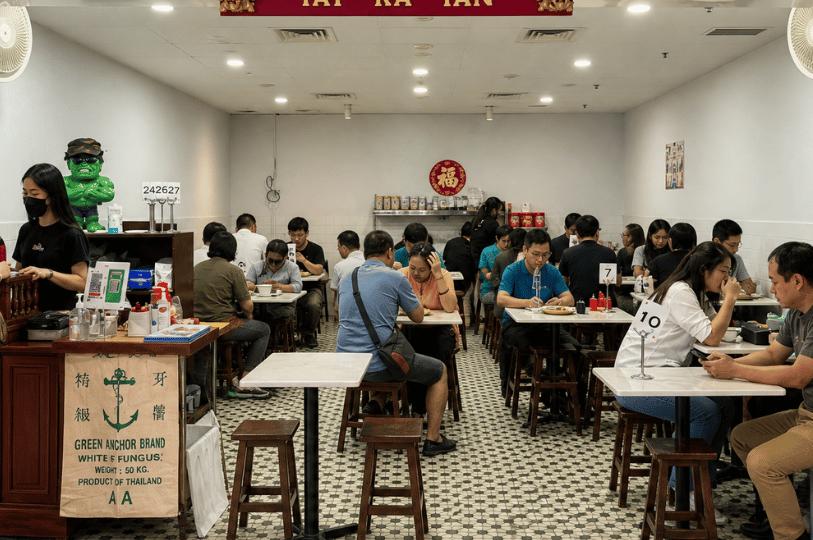
A restaurant does not need to be full to feel crowded.
Sometimes half the tables are still empty, yet the space already feels busy. There may be a queue near the entrance, servers moving quickly between tables, plates leaving the kitchen, and conversations blending into one steady layer of sound.
The dining room feels active, even when there is technically room to spare.
This is not always a problem. A little energy can make a restaurant feel popular and welcoming. But when that energy becomes pressure, the meal can feel rushed before it has even started.
Layout Shapes the First Impression
Closely spaced tables are one of the clearest reasons a restaurant can feel busier than it is.
A dining room may have empty seats, but if chairs are arranged tightly or walkways are narrow, diners still feel surrounded. Bags sit near aisles. Servers squeeze between tables. Conversations from the next group become difficult to ignore.
In mall restaurants, where space is often limited, this is common. The number of tables matters less than how easily people can move between them.
A well-planned layout creates breathing room. A poor one makes every table feel occupied, even when it is not.
Noise Makes Activity Feel Larger
Sound changes how we judge a space.
Open kitchens, hard floors, loud music, clattering plates, and conversations all add to the sense of movement. When sound reflects around the room, a moderate crowd can feel much larger.
This is why some restaurants seem calm during one visit and overwhelming during another, even when the number of diners looks similar. One large group, a busy service station, or a louder playlist can change the entire atmosphere.
Noise does not necessarily mean bad ambience. Some diners enjoy lively spaces. But when people need to raise their voices to speak across the table, the room may feel more exhausting than energetic.
Queues Create Their Own Pressure
A visible queue can make a restaurant feel full before diners even enter.
People standing near the door, watching occupied tables, create a sense that everyone inside should finish quickly. Diners may become more aware of how long they have been sitting, even if no staff member has asked them to leave.
The same effect happens when takeaway riders, waiting customers, and servers gather near the entrance. The restaurant begins to feel congested because several activities are happening in one small area.
Clear queue management can reduce this pressure. So can separating collection points from the main dining space.
Busy Does Not Always Mean Better
A lively restaurant can be appealing. It suggests demand, freshness, and momentum. But busyness is not the same as comfort.
When choosing where to eat, it helps to look beyond the number of occupied tables. Notice the space between seats, the noise level, the width of the walkways, and whether the service appears controlled or rushed.
The best busy restaurants still feel organised. Staff move with purpose. Orders arrive steadily. Diners do not feel forgotten or pushed.
A restaurant can be popular without feeling chaotic. When the layout, sound, and service flow work together, even a full room can feel manageable.
When they do not, an almost-empty one can already feel crowded.