
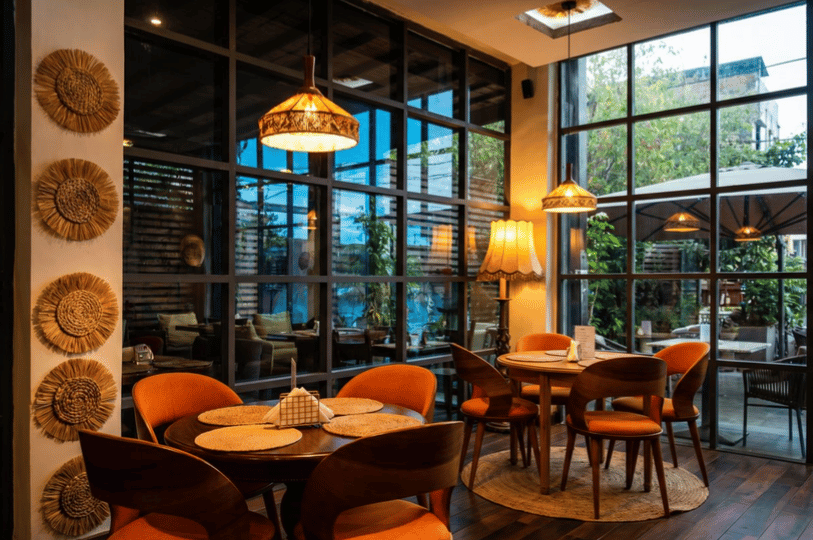
A meal can taste different depending on the room.
The food may be exactly the same, but the experience changes when the lighting is too harsh, the music is too loud, the air-conditioning is too cold, or the table feels squeezed between two other groups.
This is why ambience matters more than many diners realise. It does not replace good food, but it affects how comfortable people feel, how long they stay, and whether the meal feels worth repeating.
Comfort Shapes the First Impression
The moment diners enter a restaurant, they start forming an opinion.
Lighting, temperature, noise, and seating all contribute to that first impression before the menu is even opened. A warm, organised space can make people feel settled. A cramped or chaotic one can create tension immediately.
Seating is especially important. If chairs are uncomfortable, tables are too close together, or there is nowhere to place shopping bags, the meal becomes harder to enjoy.
In mall restaurants, this can matter even more. Diners may already be tired from walking, carrying bags, or managing children. Comfort can decide whether a meal feels restorative or exhausting.
Noise Changes How Long People Want to Stay
A lively restaurant can feel energetic. But there is a point where energy becomes effort.
When diners need to raise their voices, repeat themselves, or lean across the table to be heard, conversation becomes tiring. This can shorten the meal and make the space feel more stressful than welcoming.
Music, open kitchens, hard flooring, crowded tables, and clattering plates all add to the sound level. None of these are necessarily bad on their own, but together they can make a restaurant feel much busier than it is.
For some diners, this is part of the appeal. For others, especially families, older guests, or people meeting for conversation, it can be a reason not to return.
Ambience Affects Perceived Value
Diners do not judge value by food alone.
They also notice how the restaurant makes them feel. A well-paced meal in a comfortable room can feel more satisfying, even if the food is simple. On the other hand, good food served in an uncomfortable setting may feel less worthwhile.
This is why ambience affects expectations. Softer lighting, thoughtful table spacing, steady service, and a calm atmosphere can make a meal feel more considered. Bright lighting, rushed movement, and tight seating may signal that the restaurant is designed for speed instead.
Neither approach is automatically better. What matters is whether the atmosphere matches the restaurant’s purpose.
Good Ambience Supports the Meal
The best ambience does not demand attention.
It supports the food, the service, and the people at the table. Diners can speak comfortably, move easily, and focus on the meal without being distracted by the room.
Ambience cannot rescue poor food or careless service. But it can make a good meal feel complete.
When deciding whether to return to a restaurant, diners often remember more than flavor. They remember whether they could hear each other, whether the seat was comfortable, whether the room felt too cold, and whether they wanted to stay.
The room becomes part of the meal, even when we do not notice it at first.