
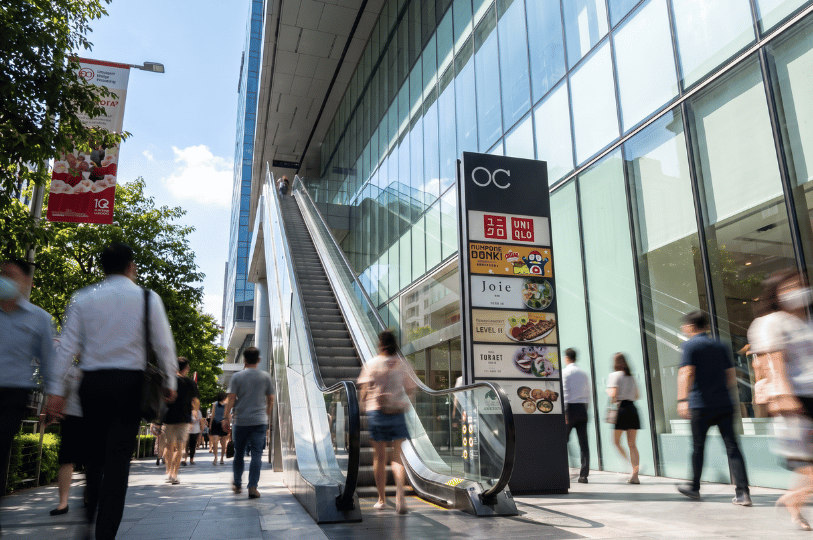
A restaurant beside an escalator can attract attention before diners have decided that they are hungry. People arriving on a new floor naturally look ahead, scan nearby storefronts, and notice the first menus, display counters, and dining rooms within view.
This pattern is especially visible in Orchard malls, where shoppers regularly move between retail floors, underground links, atriums, and connecting walkways. Resources such as Orchard Dining Guide can help diners compare planned options, but many restaurant choices are still made while people are already moving through the mall.
Escalator landings create strong visibility because they place restaurants directly within a diner’s line of sight. A bright entrance, open kitchen, pastry display, or clearly positioned menu can catch attention within seconds. Diners may not have searched for the restaurant beforehand, but the location gives them enough information to consider stopping.
Direction of movement also matters. Restaurants facing people as they step off an escalator are easier to notice than those positioned behind them or along a side corridor. Diners carrying shopping bags or following a group may continue moving forward rather than turn around, even when another restaurant nearby offers a more suitable menu.
Atriums create a similar effect across a larger space. Diners may see a restaurant from another floor, notice its queue, or recognise dishes being served at tables near the railing. This visibility allows the restaurant to remain in mind until they reach the correct level. It can also make an unfamiliar venue feel easier to approach because diners have already observed it from a distance.
Connecting walkways bring a different type of traffic. People using these routes may be moving between malls, MRT stations, offices, hotels, or department stores. Restaurants along these paths can benefit from customers who want a convenient meal without making a major detour. Quick-service outlets, cafés, bakeries, and takeaway counters often fit this pattern well.
However, high foot traffic does not always create a comfortable entrance. Diners waiting for a table may gather near the escalator landing (especially during weekdays during lunch hours), while other shoppers try to pass through the same space. Menu stands, queue barriers, delivery riders, and takeaway customers can make the area feel more crowded than the restaurant itself.
Restaurants can manage this by keeping menus easy to read, separating queues from passing traffic, and placing hosts where they are visible without blocking the landing. Clear entrances help spontaneous diners understand whether tables are available and how long they may need to wait.
Escalator traffic reveals how strongly movement shapes restaurant discovery in Orchard malls. A visible location can bring attention and unplanned customers, but it can also create noise, congestion, and a less private atmosphere.
For mall diners, the practical lesson is to look beyond the convenience of the first restaurant they see. A venue near the escalator may suit a quick, spontaneous meal, while a restaurant farther along the corridor may offer more space and calm. The best choice depends on whether visibility or comfort matters more for the meal.