
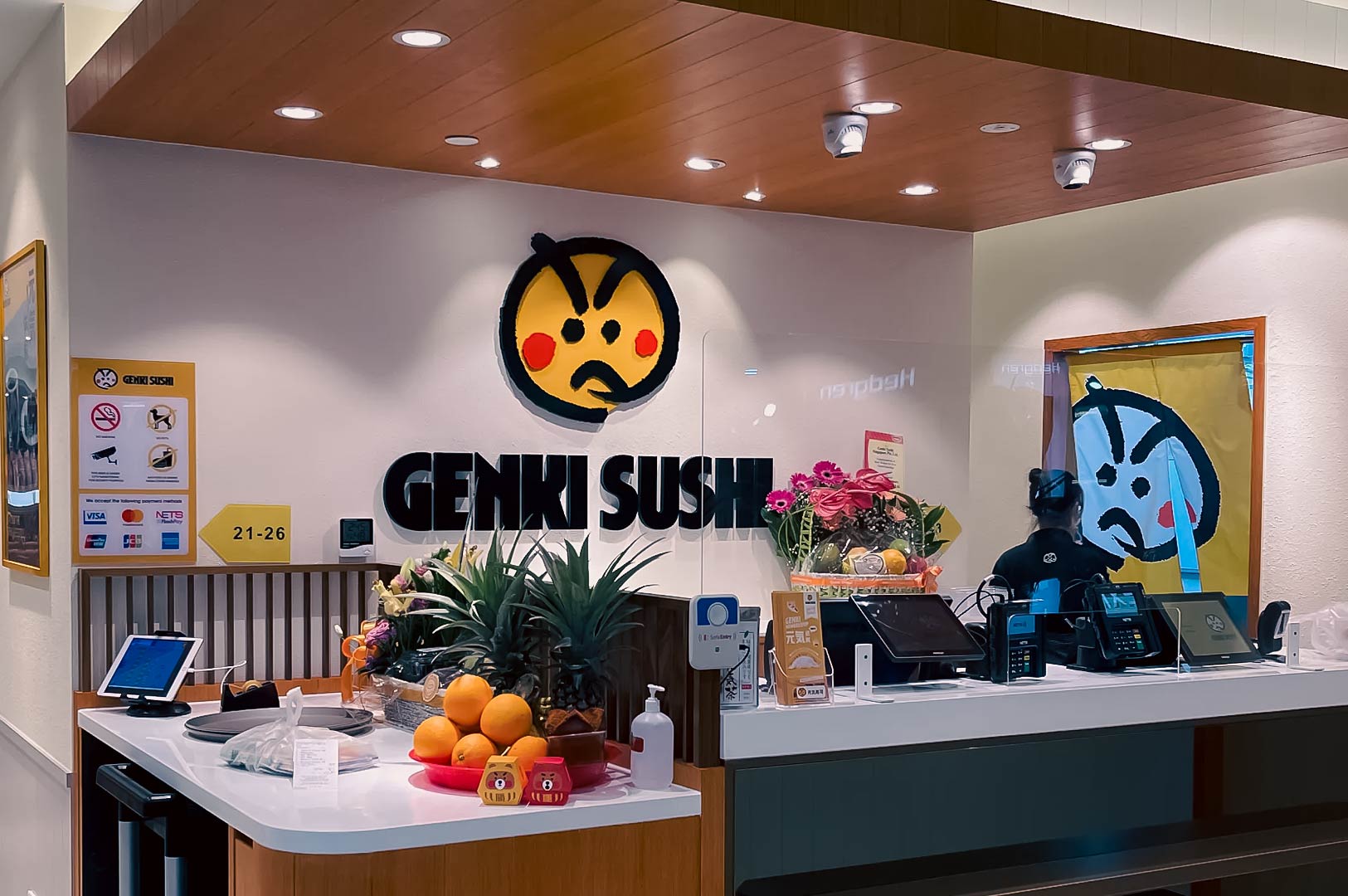
In the ecosystem of Singapore’s malls, few spaces command attention quite like Genki Sushi Singapore. It is not the loudest sushi restaurant, nor the most visually imposing. Yet, on any given evening in a busy suburban mall—whether at Waterway Point or Bugis+—the queue outside tells a distinct story. This is not merely a waiting line for food; it is a preamble to an experience defined by kinetic energy and the unique charm of conveyor belt sushi. Customers play a central role in shaping the Genki Sushi experience, as their interactions with the ordering system and participation in the dining process contribute to the lively atmosphere.
Inside, the restaurant operates less like a traditional dining room and more like a finely tuned logistical hub. Plates whir past on multi-tiered conveyor belt tracks. Miniature trains shaped like Shinkansen bullets zip to tables with silent precision. Diners tap screens, await arrivals, and engage in a rhythm of ordering and eating that feels synchronized with the machinery around them.
Genki Sushi represents a shift in how we perceive casual Japanese dining in Singapore. It moves beyond the static model of menu-waiter-kitchen and embraces a dynamic, automated system where movement is the primary aesthetic. It is a case study in how technology, when integrated with playful design, transforms a meal into an event. The appeal lies not just in the sushi itself, but in the seamless, gamified interface between the diner and the kitchen—a system where efficiency and speed are elevated to entertainment. Conveyor belt sushi restaurants in Singapore combine traditional Japanese flavours with a modern, casual atmosphere, making them popular for their affordability and variety. This has made them a go-to destination for sushi lovers and contributed to the growing popularity of conveyor belt sushi in Singapore.
The Architecture of Motion in Conveyor Belt Sushi Restaurants
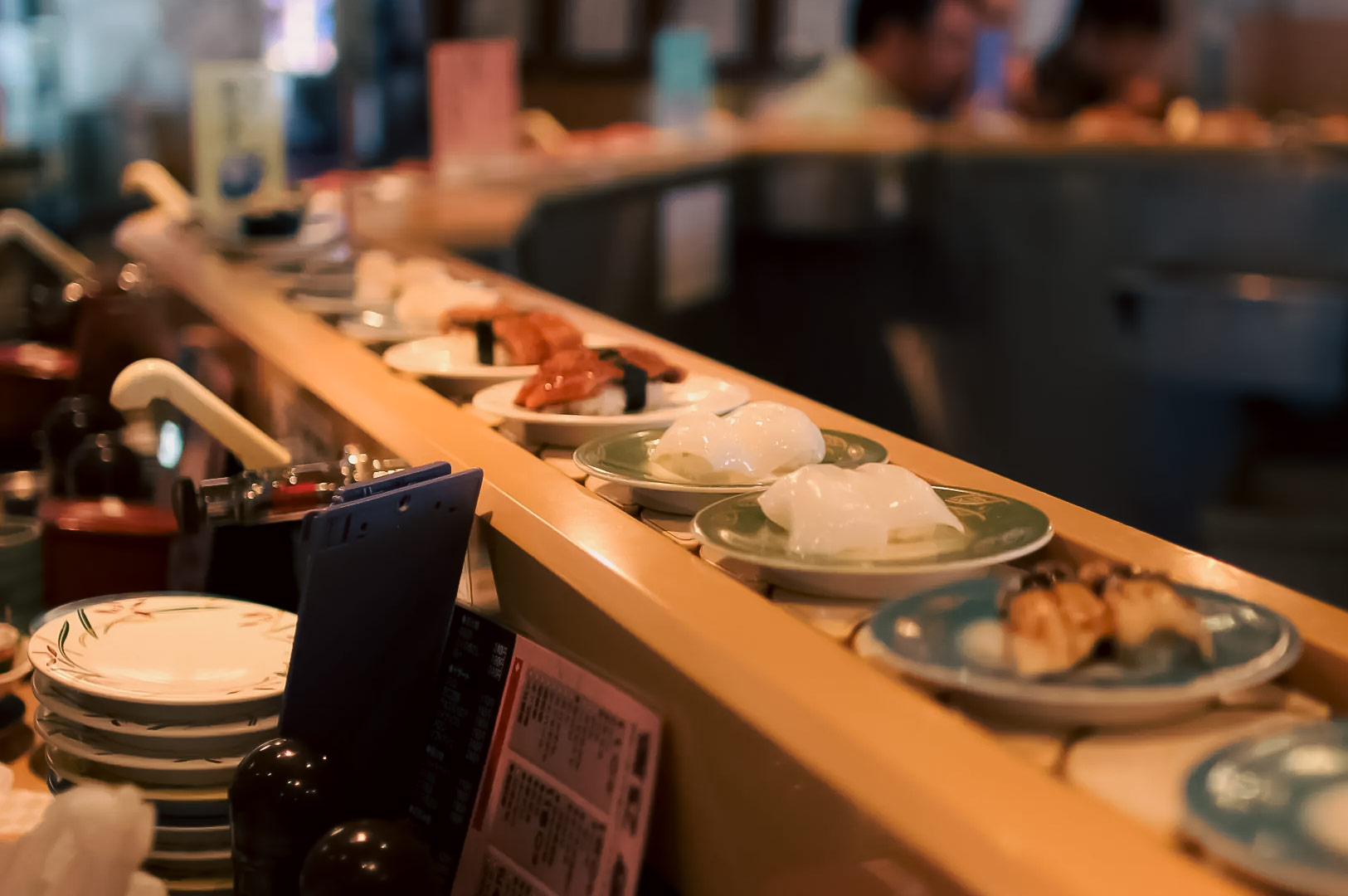
The conveyor belt has been a staple of sushi restaurants since the invention of kaiten zushi in Japan in the late 1950s. The history of conveyor belt sushi is the subject of many food enthusiasts, tracing back to Yoshiaki Shiraishi’s innovative idea inspired by beer bottles on a conveyor belt. However, the modern iteration seen at Genki Sushi Singapore, often referred to as the "Kousoku" (express) system, represents a significant evolutionary leap. The traditional conveyor belt was a passive loop; plates circled endlessly, waiting to be claimed. It relied on serendipity and visual impulse.
Genki Sushi’s model is active and on-demand. The tracks are dedicated expressways, delivering specific orders directly to specific seats. This shift from a communal loop to a point-to-point delivery system fundamentally changes the dining psychology. It introduces a sense of agency and immediacy. The diner is no longer a passive observer of a passing parade of sushi; they are the traffic controller, dispatching trains and managing the flow of dishes to their table.
Design as a Behavioral Nudge in Genki Sushi Singapore
This architecture does more than deliver food; it shapes behavior. The multi-tiered track system maximizes vertical space, allowing for higher table density without feeling cluttered. The visual noise of the moving trains creates a sense of constant activity, which psychologically encourages a brisker dining pace.
Unlike a quiet bistro where the atmosphere invites lingering, the kinetic environment of Genki Sushi subtly propels the meal forward. The movement is infectious. As trains zip by to neighboring tables, they act as visual prompts, triggering cravings and encouraging diners to pick more items. It is a brilliant feedback loop: motion begets action.
Gamification and the "Play" of Ordering at Genki Sushi Singapore
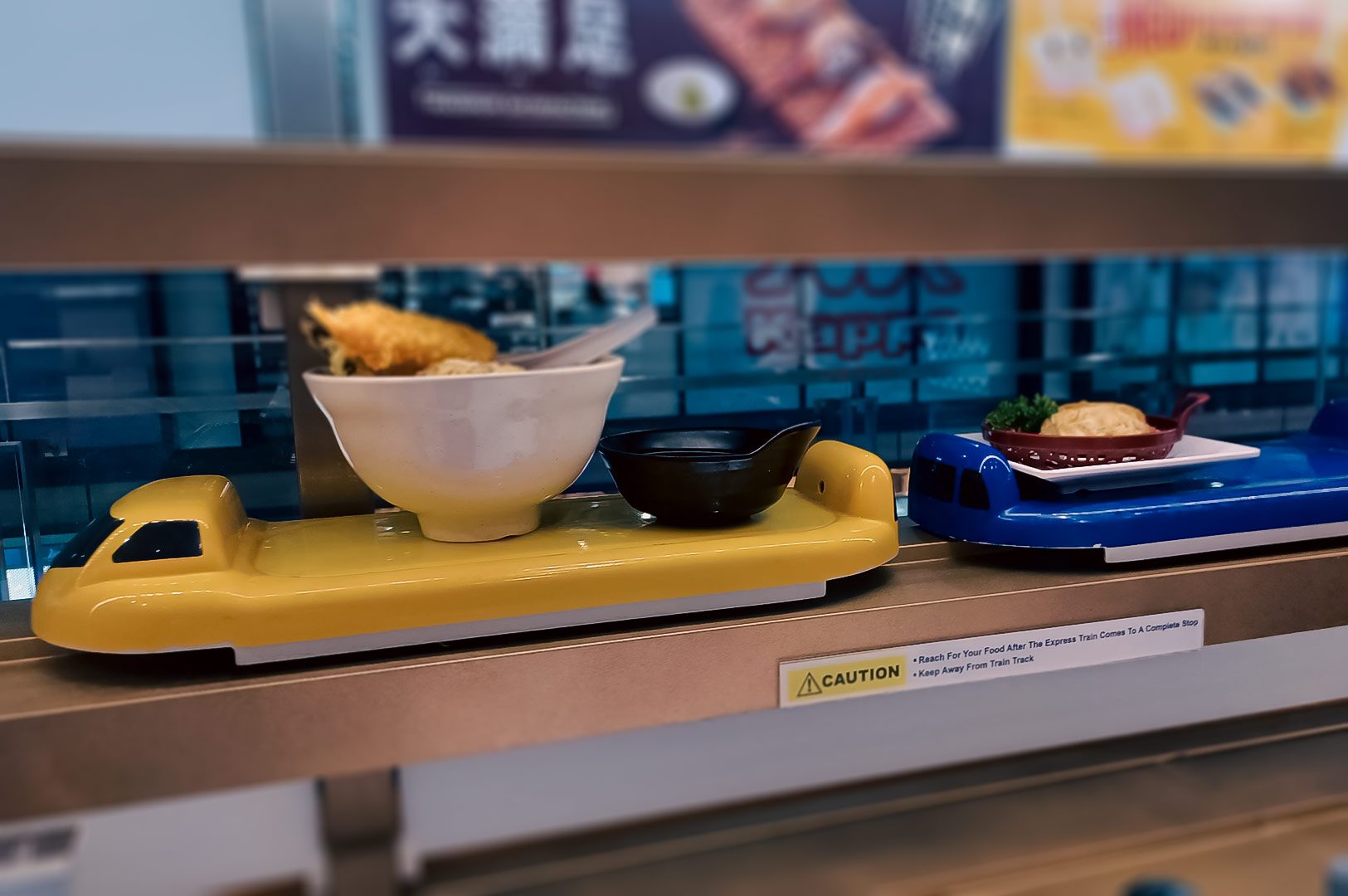
At the heart of Genki Sushi’s success is the integration of play into the dining process. The decision to use miniature trains—often modeled after Japan’s iconic high-speed rail or Formula 1 cars—is a deliberate aesthetic choice that bridges the gap between utility and whimsy.
For children and friends dining together, it is a toy that delivers dinner. For adults, it is a novelty that breaks the monotony of standard service. But beyond the visual gag, the system essentially gamifies consumption. The tablet ordering system provides immediate feedback: you tap, you confirm, and moments later, a physical item arrives at your station. It is a tangible reward loop similar to those found in mobile gaming.
This interactivity transforms the waiting period—traditionally the most friction-heavy part of dining—into a moment of anticipation. The "arrival" becomes a micro-event. Diners watch the conveyor belt, waiting for their specific train to stop. This engagement keeps diners focused on the mechanism of the restaurant, maintaining a level of alertness that prevents the experience from becoming passive.
The Screen as the Interface for Ordering Ala Carte
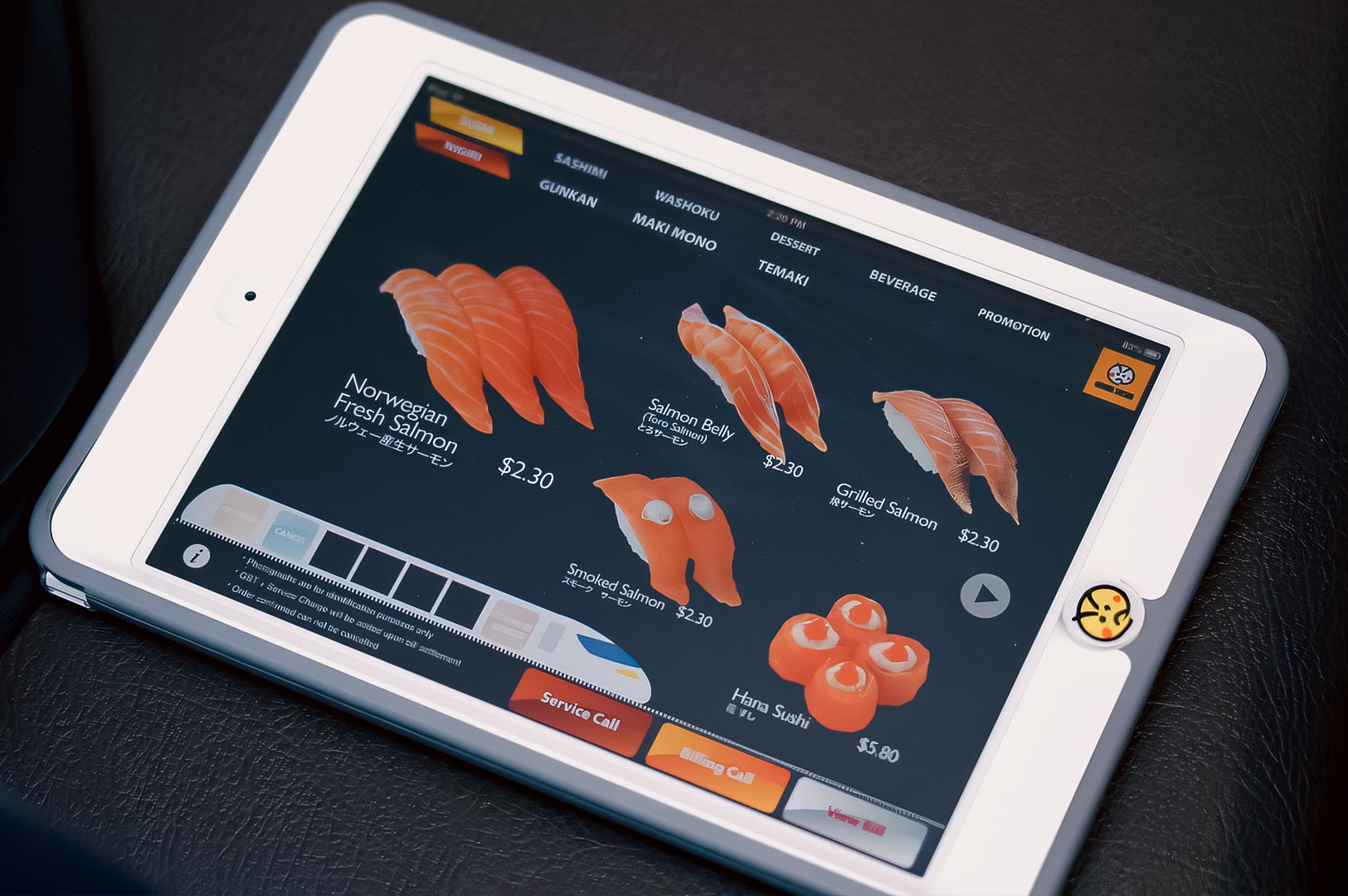
The replacement of physical menus with tablets is now common across Singapore’s F&B landscape, but Genki Sushi’s implementation feels native to its concept rather than an afterthought. The interface is the only barrier between the diner and the kitchen. There is no waiter to mediate, no specials board to decipher.
This direct line of communication creates a sense of control. Diners set the tempo. One can order a single plate of salmon sashimi ala carte, enjoy it, and then decide on a handroll five minutes later. The traditional three-course structure dissolves into a fluid, continuous stream of small plates. This flexibility aligns perfectly with modern eating habits, which increasingly favor grazing and customization over rigid meal structures.
Efficiency as an Aesthetic in Genki Sushi Singapore
While the trains provide the entertainment, the underlying engine is one of rigorous efficiency. In the high-rent environment of Singapore malls, table turnover is the critical metric for survival. Genki Sushi’s automated system addresses the two biggest bottlenecks in casual dining: ordering and delivery.
By automating the "last mile" of service—the distance from the kitchen pass to the guest—the restaurant eliminates the need for servers to ferry plates back and forth. This allows the floor staff to focus on tasks that machines cannot do well, such as table maintenance and customer assistance, although even these roles are streamlined.
The Speed of Freshness and Presentation
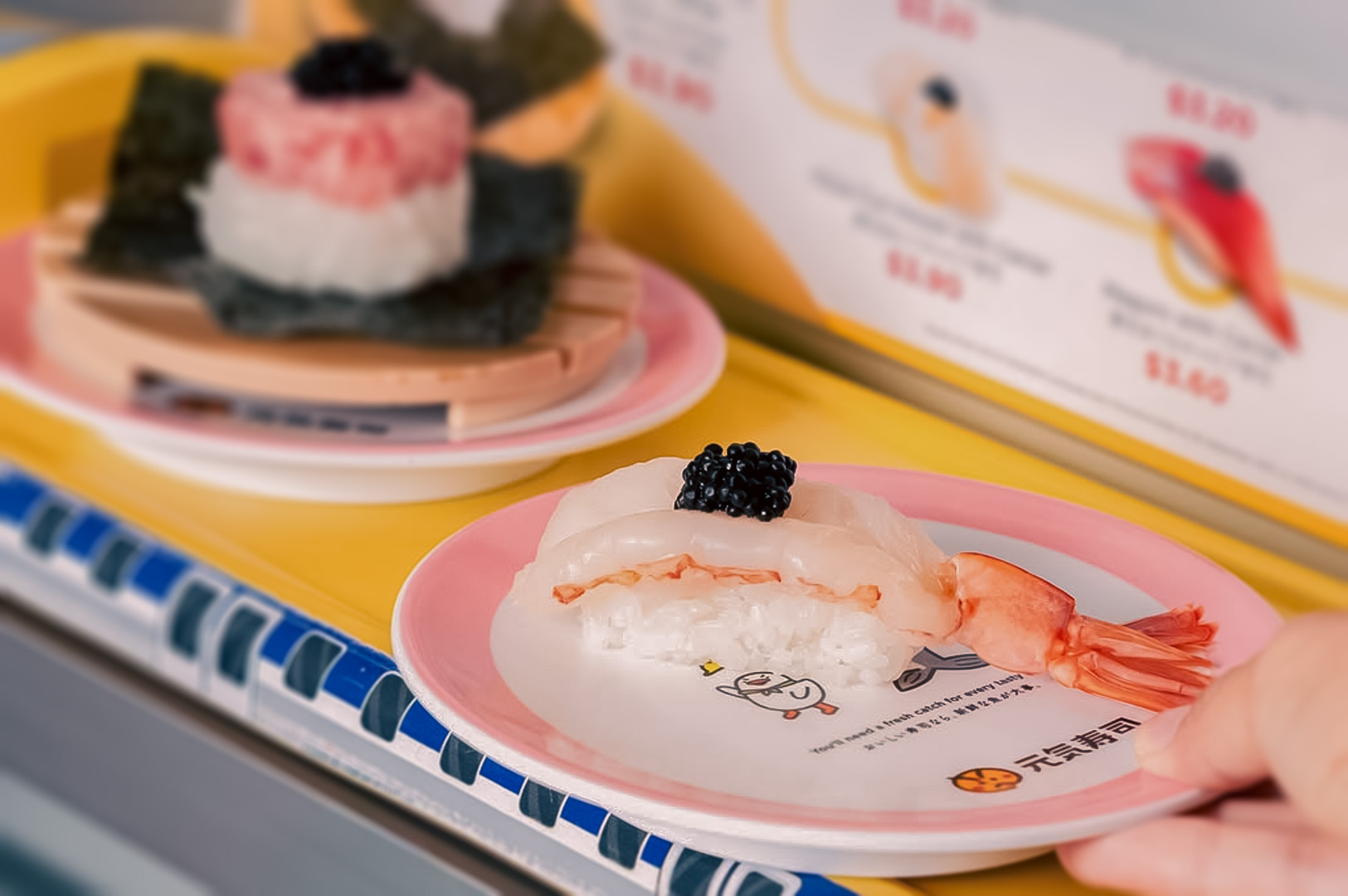
The speed of the Kousoku system also serves a culinary purpose. In traditional conveyor belt sushi restaurants, sushi can sit on the conveyor belt for indeterminate periods, leading to dried-out rice and warm fish. The express system ensures that every plate is made to order and delivered immediately to the right table.
This "freshness via speed" proposition is central to the brand’s promise. It reframes automation not as a cost-cutting measure (though it certainly is that), but as a quality assurance mechanism. The diner accepts the lack of human service because the trade-off is palpable: the food arrives faster and fresher, with consistent presentation. It is a transaction that the modern mall diner is increasingly willing to make.
Thriving in the Mall Ecosystem: Genki Sushi Singapore’s Place
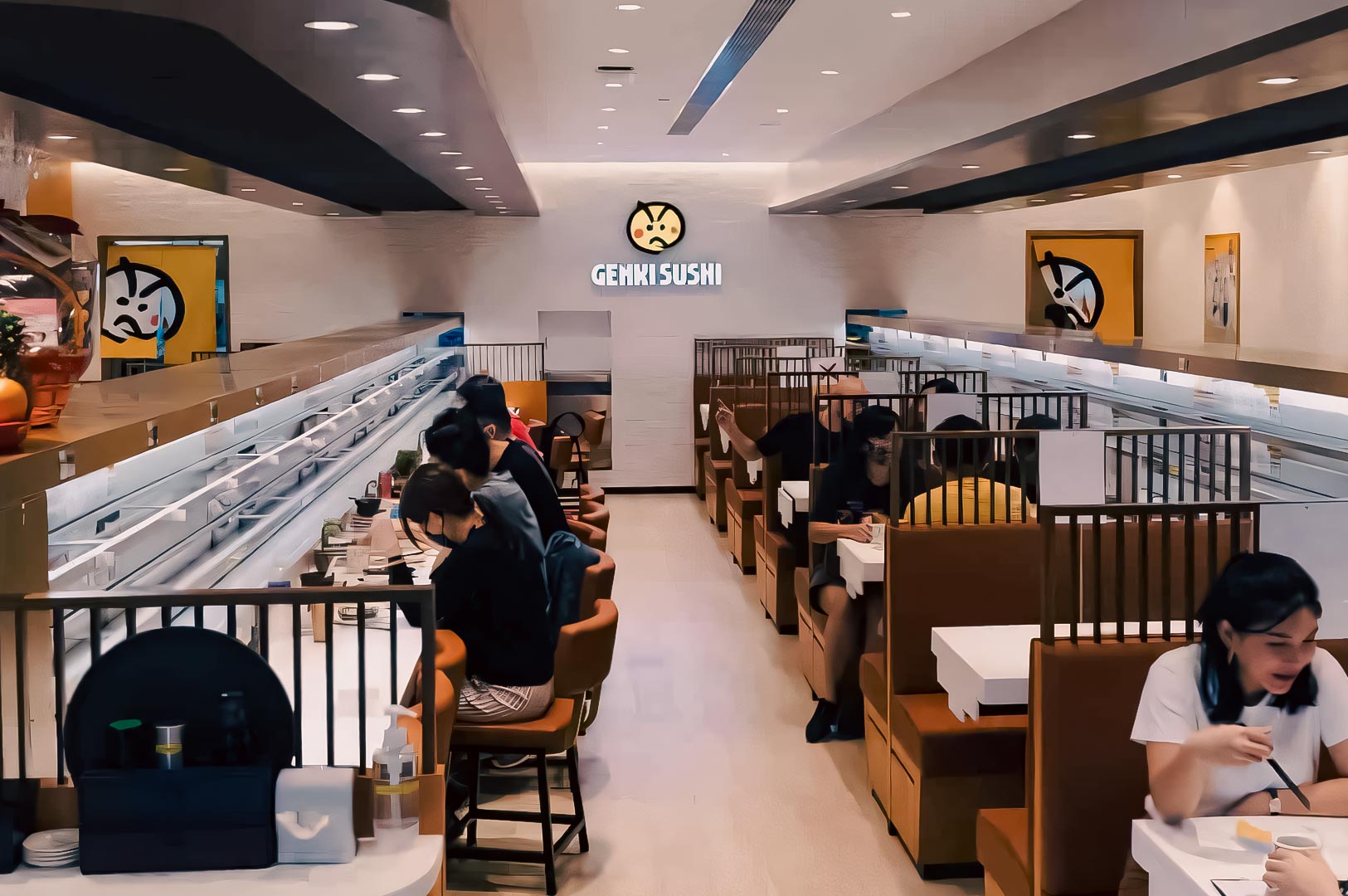
Genki Sushi’s dominance is inextricably linked to its environment. It is a creature of the mall. Destination dining districts like Dempsey Hill or Keong Saik Road rely on atmosphere, chef personalities, and unique culinary viewpoints. Malls, conversely, rely on convenience, consistency, and volume.
In a mall setting, dining is often incidental to other activities—shopping, movies, running errands. The diner’s mindset is often functional. They want a meal that is reliable, quick, and reasonably priced. Genki Sushi fits this brief perfectly, but it adds the layer of "experience" that distinguishes it from a food court or a fast-food burger joint.
It occupies a sweet spot in the market:
- Price Point: Accessible enough for students, families, and groups of friends, yet premium enough to feel like a proper sit-down meal.
- Accessibility: The menu is broad and non-intimidating, featuring cooked items, tempura, and udon alongside raw fish, catering to diverse groups.
- Novelty: The delivery system provides just enough entertainment to distract bored children and amuse weary shoppers.
This combination makes it a "safe" choice that doesn't feel boring. It is the culinary equivalent of a blockbuster movie: engineered to please a wide audience through high production values and predictable satisfaction.
Changing Expectations in Casual Japanese Dining with Conveyor Belt Sushi
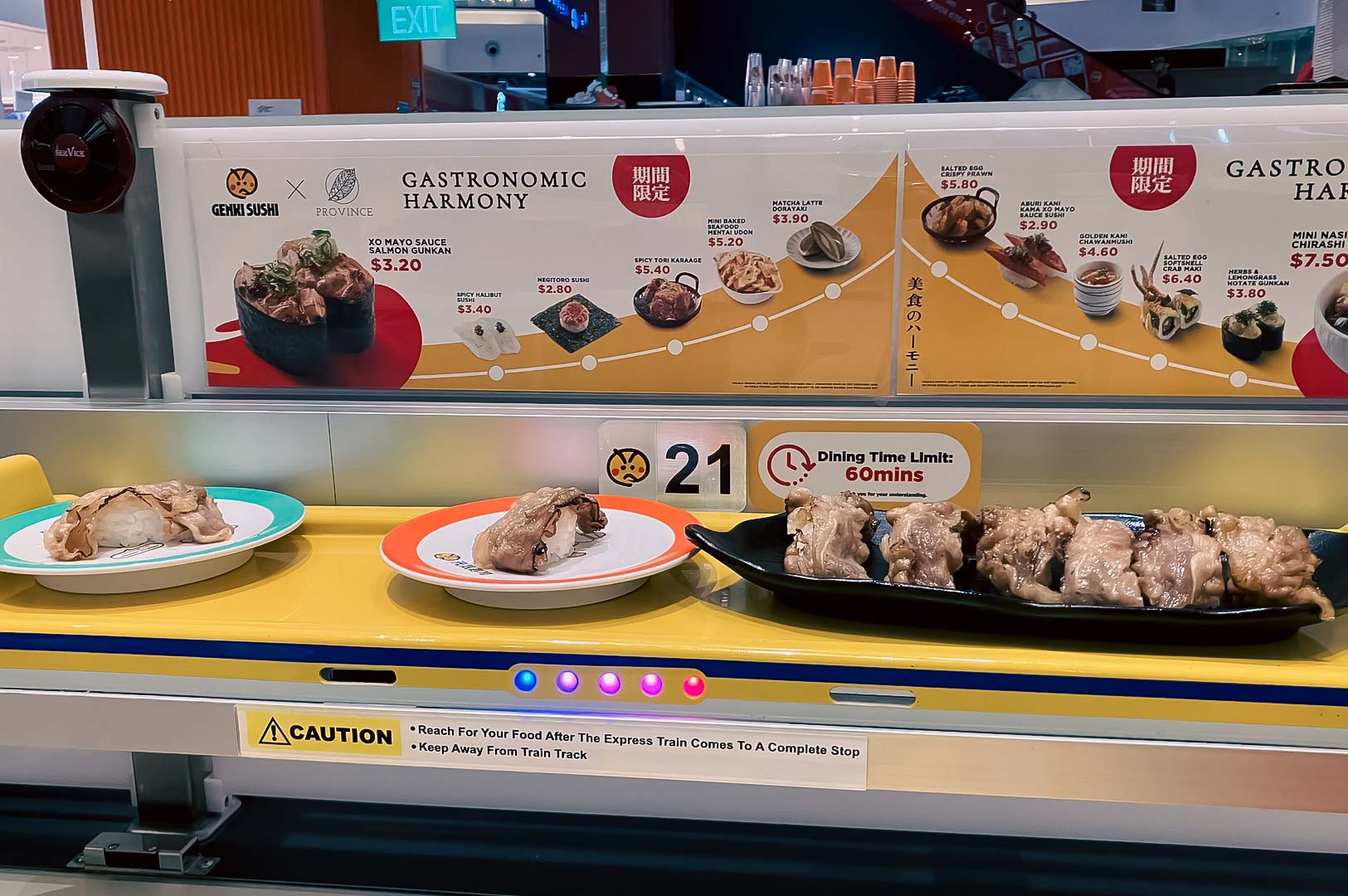
The success of Genki Sushi reveals a broader shift in what Singaporeans expect from casual Japanese food. There was a time when the presence of a sushi chef—the itamae—was essential to the experience. The interaction, the craft on display, and the human touch were markers of authenticity.
Genki Sushi proves that for the mass market, these markers have shifted. Authenticity is no longer defined solely by tradition; it is defined by precision and consistency. The "Japaneseness" of the experience is conveyed through technology and orderliness—qualities often associated with modern Japan—rather than through artisanal romance.
Diners have become comfortable with a depersonalized experience provided the system works flawlessly. The frustration of waving down a busy waiter is replaced by the satisfaction of a button press. The uncertainty of wait times is replaced by the reliability of the conveyor belt.
The Future of Automated Dine In Sushi Restaurants
As labor costs in Singapore continue to rise and manpower crunches affect the F&B sector, the Genki Sushi model offers a glimpse into the future of mass-market dining. It demonstrates that automation need not be sterile. By wrapping the technology in a narrative of play—trains, tracks, and speed—the restaurant humanizes the machine.
The diners at Genki Sushi are not just eating; they are participating in a system. They are engaging with a finely tuned loop of logistics that has been designed to feed them efficiently and entertain them simultaneously. In the busy, distracted, high-speed reality of modern Singapore, this blend of movement, plates, and play feels not just relevant, but inevitable.
Conclusion: Why Genki Sushi Singapore Stands Out Among Conveyor Belt Sushi Restaurants
Genki Sushi endures not because it offers the best sushi in Singapore, but because it offers the most synchronized dining experience among conveyor belt sushi restaurants. It understands that in a crowded mall, the luxury of time is scarce. By transforming the act of waiting into a visual spectacle and the act of ordering into a game, it resolves the tension between speed and enjoyment.
For the observer of dining culture, it serves as a fascinating example of how design dictates behavior. It challenges us to look past the novelty of the miniature trains and see the sophisticated operational logic underneath.
The best part is the way diners can pick their favorite dishes, enjoy drinks and desserts, and feel charged with anticipation as their orders travel swiftly to their table. The next time you visit, look away from the screen for a moment. Watch the tracks. Observe the rhythm of the room. You will see a sushi restaurant that is moving in perfect time with the people and the city outside its doors. For more exciting dining experiences and hidden gems across Singapore's malls, explore more at sgmallsdiningguide.com.sg and discover the best eats and culinary adventures in town.