
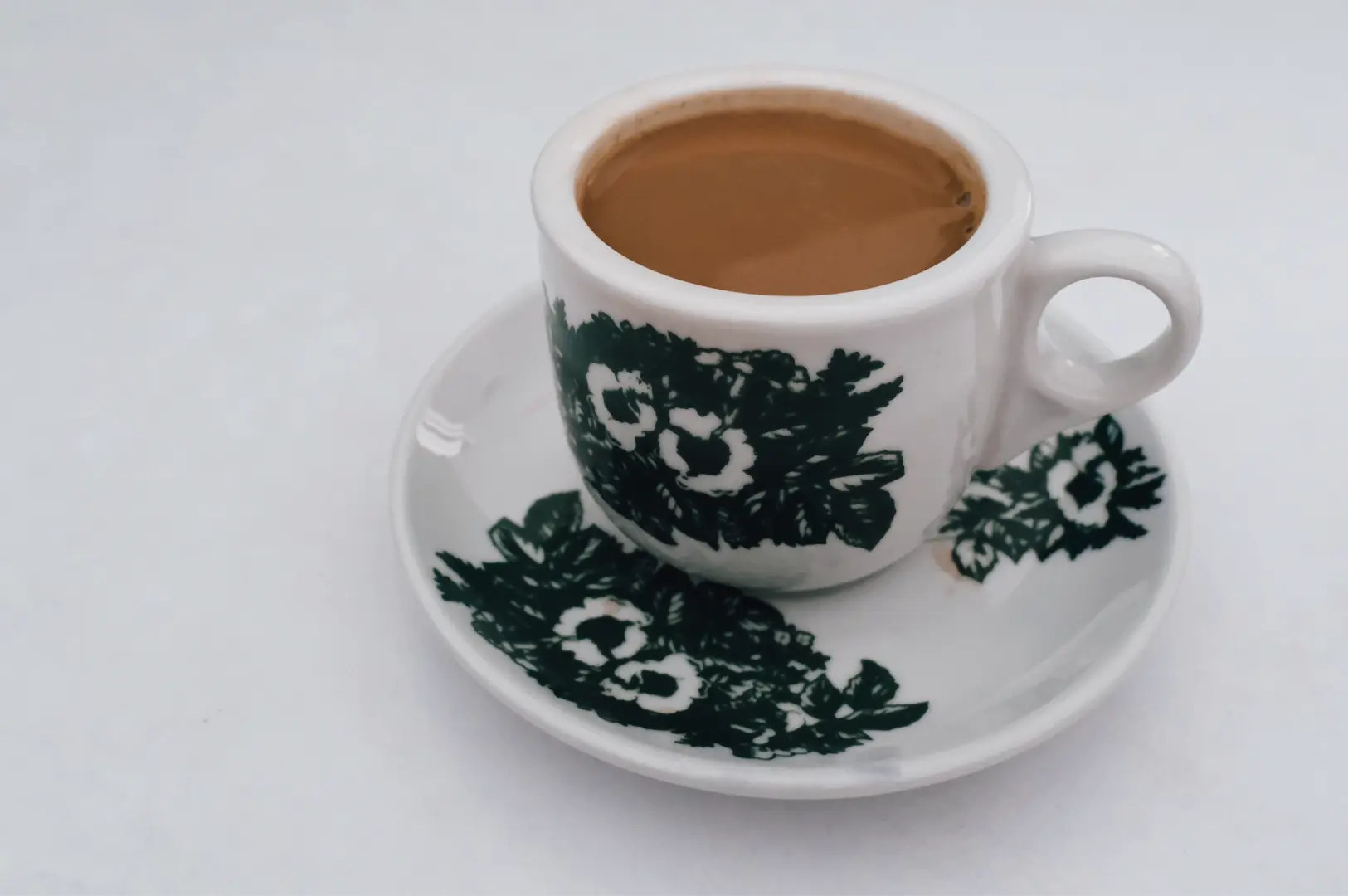
I still remember my first morning trying to order a simple coffee at a bustling kopitiam-style stall inside Causeway Point.
I stepped forward, certain of myself, and asked for a “black coffee.” The uncle paused, looked at me, then moved with quiet certainty. A moment later, I was handed a glass mug. Dark coffee swirled into a thick pool of condensed milk.
It wasn’t what I expected. But it was warm, bold, and strangely comforting.
That was my first real encounter with coffee culture in Singapore. It is not just a drink. It is a language, a rhythm, and a story you step into whether you are ready or not.
The Two Worlds of Singapore Coffee
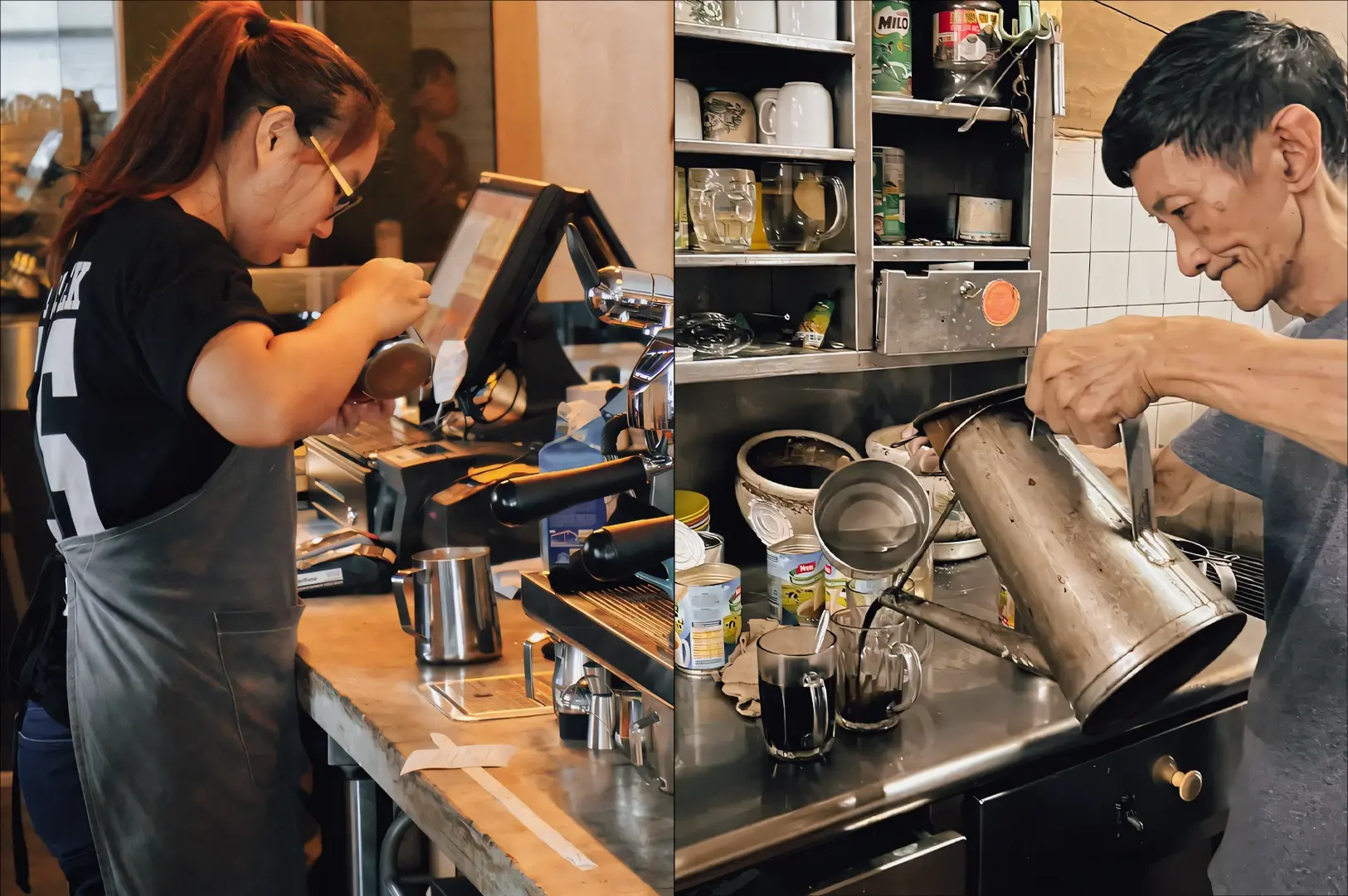
When we talk about coffee in Singapore, we are usually talking about two distinct experiences.
First, there is the traditional kopitiam (coffee shop).
These are the open-air, unpretentious social hubs found in every neighborhood. Here, coffee is roasted with sugar and margarine, brewed in a long-spouted pot through a sock-like filter, and served in thick glass mugs. It is fast, cheap, and deeply woven into our daily routines.
Then, you have the modern specialty coffee shops or cafés.
Over the last decade, Singapore has developed a massive third-wave coffee scene. You will find beautifully designed spaces serving single-origin pour-overs, cold brews, and expertly pulled espresso drinks.
I prefer to mix it up. I enjoy a strong, sweet kopi to start my day and a leisurely filter coffee at an indie café on weekends. Both are authentic parts of our local coffee culture.
How to Order Kopi Like a Local
Ordering kopi can feel confusing at first. The terms come from a mix of Hokkien, Malay, and English. Together, they form a unique kopi lingo that locals use every day.
Once you understand it, everything becomes much easier.
- Start with the base: “Kopi” simply means coffee with sweetened condensed milk.
- Choose your milk: Want condensed or evaporated milk and sugar instead? Order Kopi C. Want no milk at all (black coffee with sugar)? Order Kopi O.
- Adjust your sweetness: If you want less sugar, add Siu Dai to the end of your order (for example, Kopi O Siu Dai). If you prefer no sugar at all, add Kosong instead (for example, Kopi O Kosong).
- Choose your temperature: Want it iced? Add Peng to the end (e.g., Kopi C Peng).
I almost always order a Kopi C Siu Dai. It gives you a creamy texture from the evaporated milk without the overwhelming sweetness of condensed milk.
But the beauty of it is this: you’ll find your own order, your own rhythm. And once you do, it feels like you belong.
What to Expect When Getting Coffee in Singapore
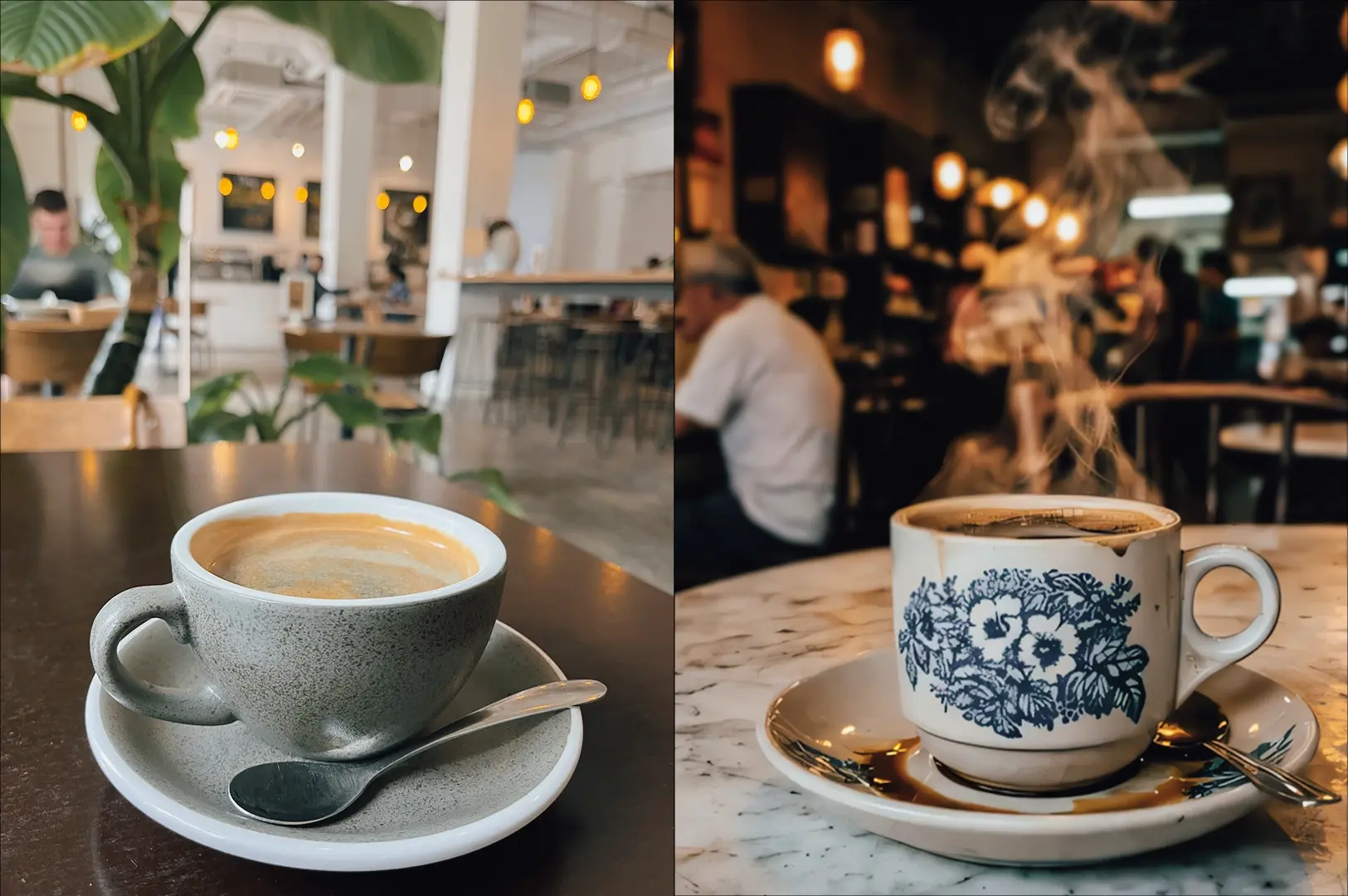
Prices can differ quite a bit depending on the type of place you visit.
At the Kopitiam
Expect speed. Expect noise. Expect life.
Tables are often shared, and you might notice seats “choped” with simple tissue packets. Orders come quickly, sometimes without much fuss, but that is part of the charm. I’ve always felt it is less about the drink and more about the moment.
Here, you are stepping into a multicultural society where food connects people across languages and routines. And your kopi is almost always just a few dollars.
At the Café
Step into a café and the pace shifts.
There is more space to settle in, more intention in the design, and more room to notice the details. The grind of a coffee bean, the art on a latte, the quiet focus of a barista.
Here, you are not just drinking. You are taking in the craft behind specialty coffee, one slow sip at a time. Prices may be higher, but so is the care behind each cup.
Common Mistakes (And What They Taught Me)
From my own experience, I’ve found that making a few common mistakes when ordering kopi at malls like Causeway Point has helped me better appreciate Singapore’s unique coffee culture.
- Thinking All Kopi Tastes the SameIt does not. Each stall has its own way of roasting and brewing. The difference may be subtle, but it matters. Finding a favourite stall becomes part of understanding coffee culture in Singapore.
- Getting Nervous at the CounterIt happens often. The line moves quickly, and the language can feel unfamiliar. I think the best approach is to decide on your order before taking the next step. Say it clearly and confidently.
- Expecting Every Café to Be a WorkspaceNot all cafés are designed for long stays. Some are small and focused only on the craft of coffee. Others may not have power outlets or strong WiFi. Paying attention to the space helps set the right expectations.
Why Coffee Culture in Singapore Feels Unique
I’ve come to see coffee here as something you grow into, not just something you drink.
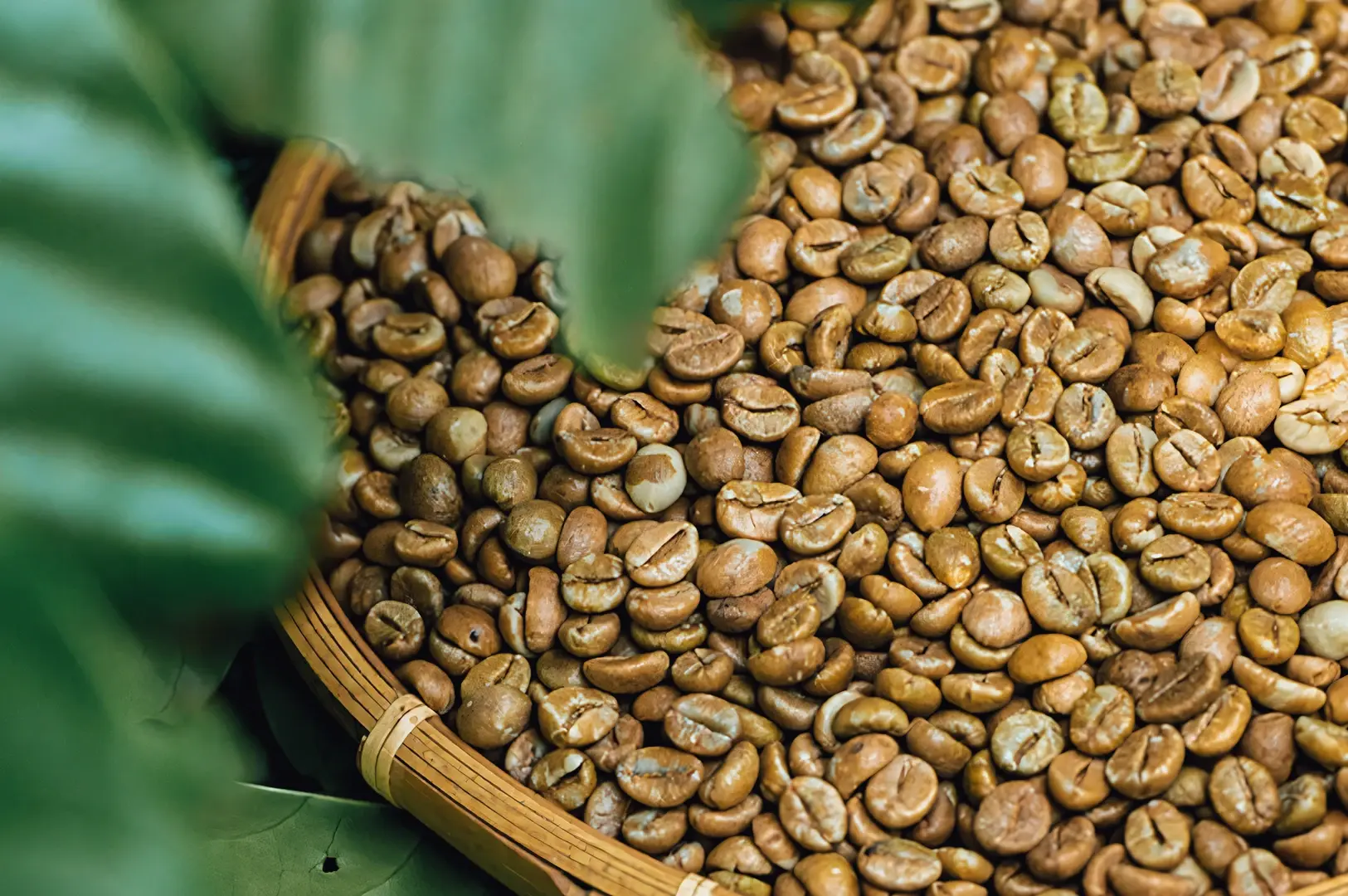
In Singapore, coffee slips quietly into everyday life. It shows up in early mornings, in conversations over shared tables, in small pauses you didn’t know you needed. It carries a rich history shaped by trade, migration, and adaptation. From strong, familiar brews made with robusta beans in kopitiams to carefully sourced arabica in specialty cafés, each cup holds a piece of that journey.
And maybe that is why it stays with you. Not just on the palate, but somewhere deeper.
Frequently Asked Questions
What is coffee culture in Singapore?
It feels like two stories told side by side. One lives in kopitiams, where kopi is quick, familiar, and part of daily life. The other unfolds in cafés, where coffee is slower, more deliberate, and shaped by craft.
How do you order coffee in Singapore?
Start simple. Say kopi, kopi o, or kopi c, then adjust from there. Add siew dai if you want it less sweet, kosong if you want no sugar, and peng if you prefer it iced.
Is coffee in Singapore expensive?
It depends on where you are. A cup of kopi is affordable and part of everyday routine, while café coffee costs more, reflecting the time, beans, and care behind each brew.
Before Your First Sip
If you are exploring Singapore’s coffee culture for the first time, there is no need to get everything right. I have ordered the wrong thing, hesitated at the counter, and been confused by the kopi lingo more than once. Those little mix-ups are part of the experience.
I suggest starting with something simple like a Kopi or Kopi O. You can easily try this at malls like Causeway Point. Just watch how other coffee consumers order and listen to the rhythm at the stall. It starts to make sense after a few tries.
In the end, coffee here is not just a drink. It is something I have grown into slowly, one cup at a time, whether at a neighbourhood kopitiam or a quiet specialty coffee shop.