
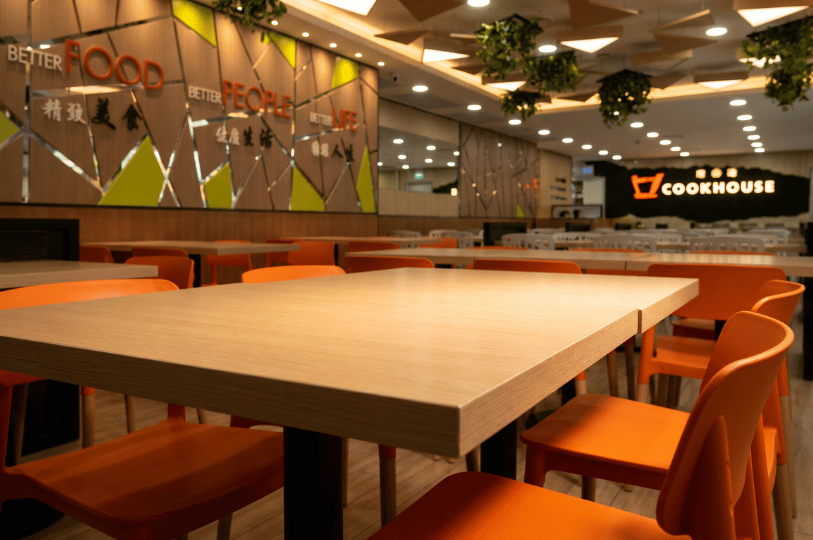
Some tables are only meant to hold plates.
Others, without anyone planning it, begin to hold parts of our lives.
They sit beneath bright mall lights, beside glass railings or near the hum of a food court. People come and go. Trays are cleared. Menus change. Yet certain tables become quietly familiar, not because they are beautiful, but because of what happened around them.
Ordinary Places, Important Moments
Mall dining tables are rarely designed to feel sentimental.
They are practical. Easy to clean. Positioned for quick turnover. But that does not stop them from becoming part of important moments.
A birthday may be celebrated at one after school. A family may gather there after visiting a relative. Two friends may sit across from each other, trying to find the right words after months apart. A first date may begin over coffee because neither person knows where else to go.
The setting may be ordinary, but the moment is not.
That is often how memory works. It attaches itself to places that seemed unremarkable at the time.
The Table Remembers the Routine
Not every meaningful meal is tied to a celebration.
Some tables become familiar through repetition. The same corner table after tuition. The same booth after Sunday errands. The same food court seat where an elderly parent prefers to rest before heading home.
Over time, the routine gives the place weight.
We may order the same dishes, complain about the same crowd, or sit in the same arrangement without noticing. Then one day, the routine changes. Someone moves away. Children grow older. A restaurant closes. The table disappears, and only then do we understand how much of our life had gathered around it.
Familiar places often become meaningful before we realise it.
A Quiet Record of Who We Were
Mall tables witness us in different versions of ourselves.
They see tired parents, nervous teenagers, colleagues becoming friends, couples learning how to share silence, and families stretching one meal into another hour together.
They hold shopping bags, birthday cakes, unopened envelopes, schoolbooks, and phones placed face down during difficult conversations.
They are present without asking to be remembered.
Perhaps that is why certain restaurants stay with us long after the food itself has faded. We remember where we sat. We remember who was across from us. We remember the pause before someone spoke, or the laughter that made nearby diners look over.
The table becomes part of the story.
Mall dining is often described in terms of convenience, choice, and value. All of that matters. But there is another reason these places remain important.
They give everyday life somewhere to happen.
Long after the plates are cleared, the tables continue to hold what we leave behind: small moments, shared routines, and the people we once were together.