
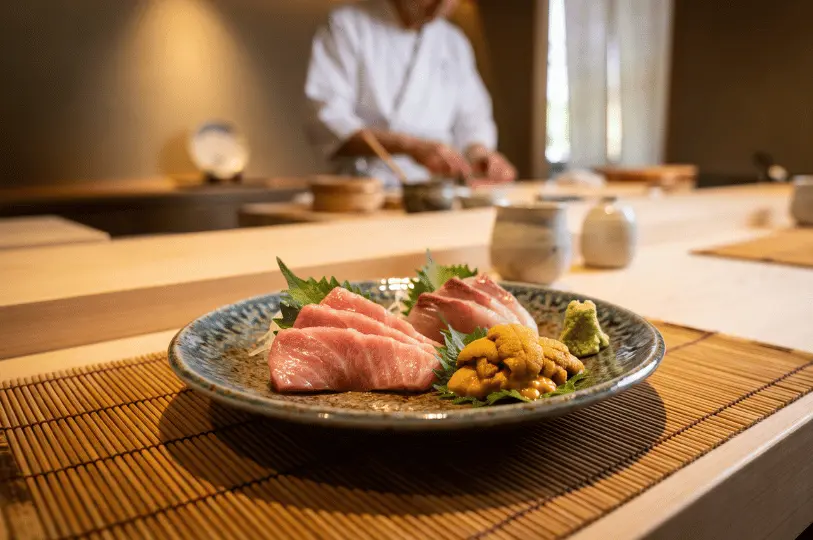
The first time I ordered sashimi, I did everything wrong.
I was maybe nineteen, sitting at a counter in Singapore with a friend who knew what she was doing, and I panicked. I drowned a slice of salmon in soy sauce, dropped a fat clump of wasabi on top, and swallowed it before I could taste anything. She looked at me the way you look at someone who just paid for something and threw it away.
She wasn’t wrong.
It took years, and a lot of quietly embarrassing meals across sushi restaurants in Singapore and Japan, to understand what I was actually eating. So if raw fish makes you nervous, or you’ve been nodding along at the counter pretending you know the difference between chutoro and akami, this is for you. No lecture. Just what I wish someone had told me.
What Sashimi Actually Is
Let’s clear this up first, because I got it wrong for longer than I’d like to admit.
Sashimi is raw seafood, thinly sliced and served on its own. No sushi rice. It usually comes with soy sauce, wasabi, grated ginger, and pickled ginger on the side. Served raw and simply, with nothing to hide behind.
Here’s how it sits next to the others:
- Sashimi — sliced raw fish, no rice
- Nigiri sushi — a slice of fish pressed over a small bed of vinegared rice
- Sushi roll (maki) — fish and other fillings rolled with sushi rice and seaweed
- Chirashi — assorted sashimi scattered over a bowl of rice
So when someone says “sushi,” they might mean any of the rice-based ones. Sashimi stands apart because there’s nothing to hide behind. Just the fish, and whatever the chefs did to it. That’s exactly why it’s worth learning.
What Makes Fresh Sashimi Good
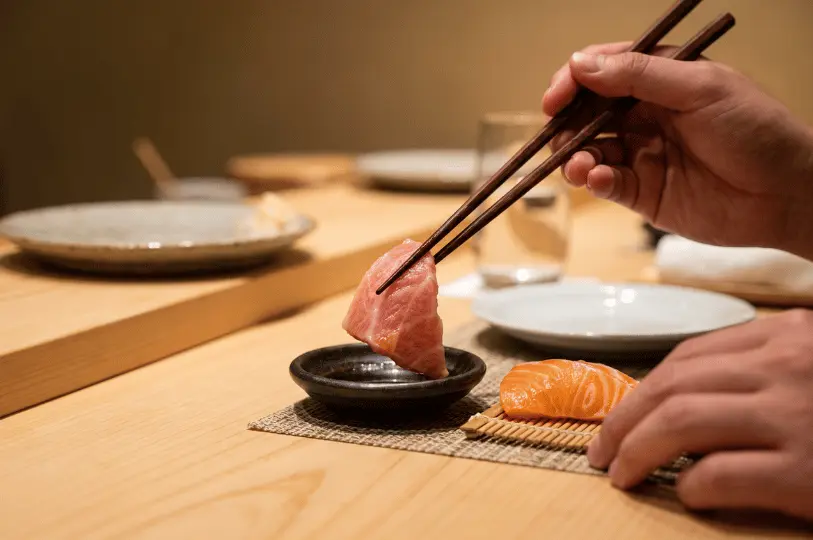
This is the part nobody explains, so you end up judging by price and hoping for the best. I did that for ages.
- Appearance. Don’t chase bright colour. I used to think the more vivid the salmon fish, the better. Completely backwards. Look for flesh that’s clean and intact, neatly cut, no mushy edges or dull surface. A plate of assorted sashimi should look alive, not tired.
- Smell. Good fresh seafood smells like the sea, faint and clean. If something sour or sharp hits you, that’s your warning. Fish should never announce itself from across the table.
- Texture. “Good” doesn’t mean soft. Depending on the fish, you might get firm, buttery, springy, silky, or delicate. Hotate melts. Akami tuna has a clean, meaty bite. Both can be excellent. They’re just different.
- The cut. Two sushi restaurants can serve the same salmon and give you completely different experiences, depending on how it’s sliced. Thickness, angle, and how the fish was trimmed all play a role. Premium sashimi is often about the cut as much as the fish itself.
- Freshness. Freshness isn’t just about timing. When fresh seafood is flown in directly from Tokyo or Hokkaido, handled properly and kept at the right temperature throughout, you can taste the difference in every slice. That kind of freshness is a delicacy in its own right.
Insider knowledge: “Fresh” doesn’t mean caught this morning. Tuna, for example, is often aged under controlled temperature conditions to deepen its flavour. Age isn’t spoilage when it’s handled correctly. What matters is the cold chain, not how recently the fish was swimming.
Sashimi Salmon and Other Fish Worth Knowing
If you’re just starting out, don’t try to order the whole menu. Here’s a simple map I wish I’d had:
Fish / Seafood | Character | Good for |
|---|---|---|
Sashimi salmon | Fatty, soft, rich | First-timers |
Akami tuna (maguro) | Clean, firm, meaty | Those who prefer firmer fish |
Chutoro | Medium-fatty tuna | Wanting more richness |
Otoro | Very fatty, buttery | Special occasions |
Hamachi (yellowtail) | Mild, supple, slightly fatty | First-timers wanting something different |
Uni (sea urchin) | Briny, creamy, intense | Adventurous eaters |
Hotate (scallop) | Sweet, tender | Seafood lovers |
Amaebi (sweet shrimp) | Sweet, delicate | Shellfish fans |
Ikura (salmon roe) | Salty, briny, popping | Those wanting stronger flavour |
Octopus / squid / unagi | Chewy, savoury, distinct | Those wanting variety |
The thing that took me too long to understand: tuna is not one flavour. Lean maguro and buttery otoro come from the same fish and taste like two different worlds. Trying them side by side was the meal that finally made sashimi click for me.
My starting point suggestion: sashimi salmon for comfort, hamachi for texture, and one slice of tuna to find where you land.
How to Order at Sushi Restaurants Without Panicking

Individual pieces or a moriawase?
A moriawase is an assorted sashimi platter, and it’s your best option if you’re still figuring out your taste. It lets you compare fresh sashimi from multiple fish in one sitting, which is the fastest way to learn what you actually enjoy. Once you know you love hamachi and couldn’t care less about tai, order individually.
Ask what’s good today.
This is the single best habit I’ve picked up across sushi restaurants in Singapore and Tokyo. Instead of pointing at the priciest thing on the dinner menu, just ask: “What’s good today?” Chefs light up when you ask. You almost always eat better.
Pro tip: Don’t order a giant platter first thing if you’re having a full meal. Fresh sashimi tastes best when your palate is clean. Start smaller than you think you need, then add more if you want.
Many diners also make the mistake of ignoring the rest of the menu. A bowl of miso soup, a side of vegetables, or even cold soba noodles can round out a sashimi meal beautifully. Some Japanese restaurants also offer fried options like tempura and soft shell crab, rice bowls, or udon if you want something more substantial alongside your raw fish. At higher-end spots, you might even find premium sushi courses followed by foie gras and a small dessert, all paired with sake. The full experience is worth exploring slowly.
Soy Sauce, Wasabi and Ginger for Raw Fish
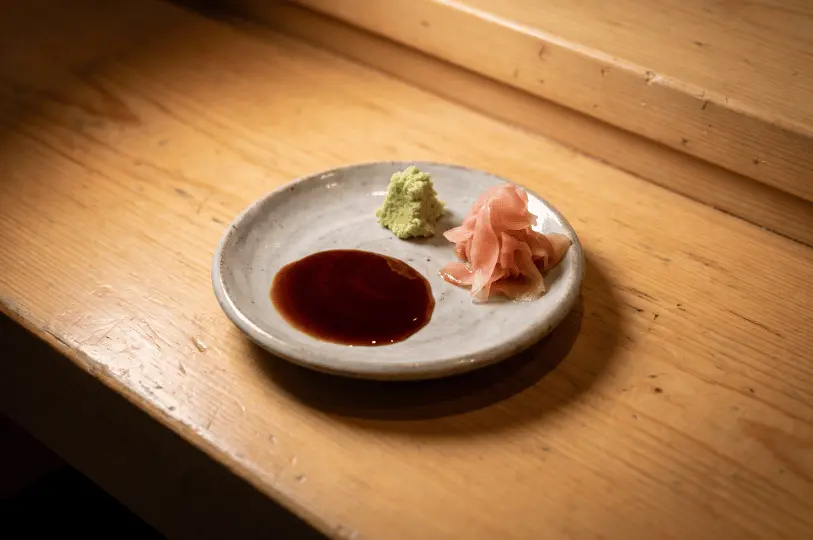
Here’s where my nineteen-year-old self went so far wrong.
- Soy sauce. Use it to season, not to soak. A light dip on the fish, not a full submersion. You’re eating fresh seafood, not a salt bath.
- Wasabi. It adds heat and aroma, but a mountain of it flattens everything underneath. Go easy, especially with delicate fish like tai or swordfish.
- Grated ginger and pickled ginger. Ginger is a palate cleanser you eat between different fish to reset before the next flavour. Don’t pile it on the sashimi itself.
The whole principle: let the fish lead. The condiments support it. They don’t bury it.
Fresh Seafood Safety in Singapore
This part matters more here than most guides will tell you.
The Singapore Food Agency classifies ready-to-eat raw fish as a high-risk food because it isn’t cooked to eliminate bacteria and parasites. That’s not a reason to avoid it. It’s a reason to choose carefully where you eat it.
- The freshwater fish rule. After a 2015 outbreak of Group B Streptococcus linked to raw freshwater fish, Singapore banned raw freshwater fish in ready-to-eat dishes from 5 December 2015. Saltwater fish sashimi remains permitted under the proper requirements. Most people here don’t know this.
- Buying to eat at home? Get raw-consumption fish from licensed sellers, keep it chilled at 0 to 4°C, watch expiry dates, and use separate utensils for raw and cooked food.
- Who should be more careful. Pregnant women, young children, the elderly, and anyone with weakened immunity should avoid raw seafood or consult a doctor first.
The simplest takeaway: you can’t judge safety by sight alone. Choose reputable Japanese restaurants and sushi bars, and let their standards do the work.
Tomi Sushi: A Solid Spot for Traditional Japanese Cuisine
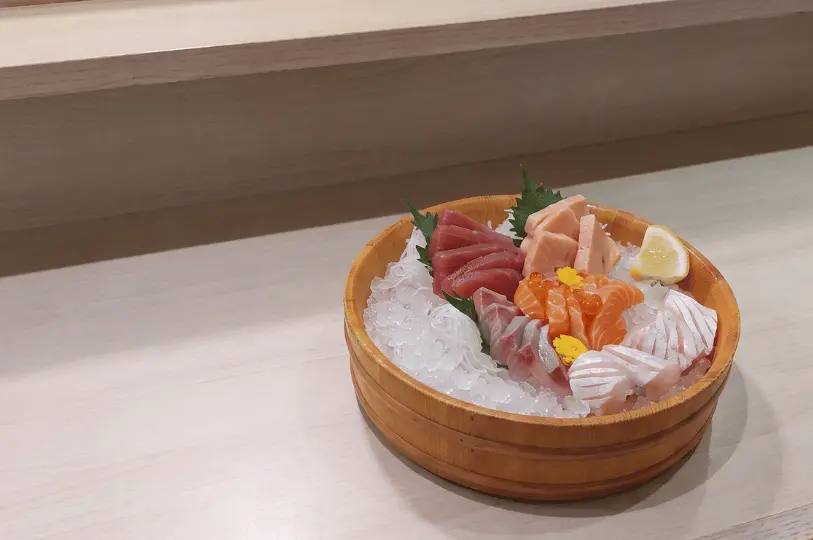
If you’re new to eating sashimi in Singapore and want somewhere dependable to start, Tomi Sushi is worth knowing. It brings a traditional Japanese approach to fresh seafood, with premium ingredients sourced carefully and prepared with care. Their assorted sashimi and nigiri sushi platters are approachable for first-timers who want a proper introduction to Japanese cuisine without diving straight into an omakase experience. The lunch set is a gentle, affordable entry point, and the miso soup that comes alongside it is exactly what you’d hope for.
Kuro Maguro: Fresh Sashimi Made Accessible
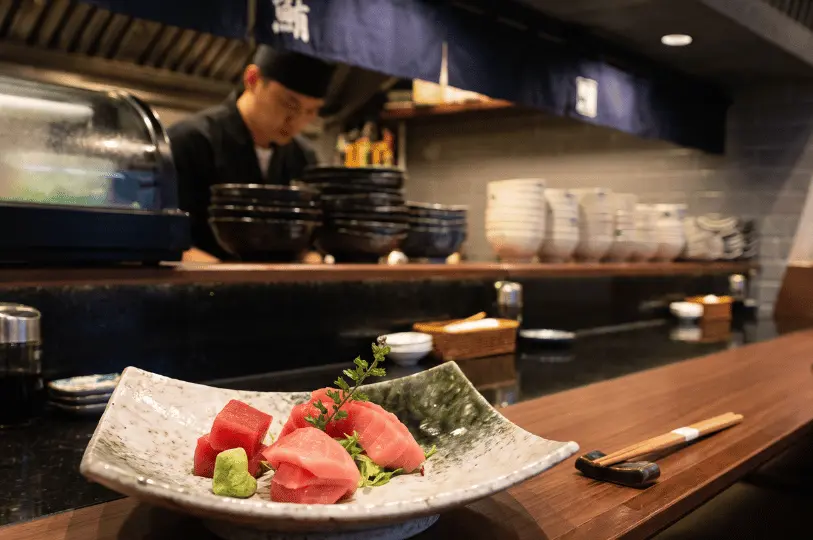
Kuro Maguro is one of the more focused names in Singapore’s sashimi scene, built almost entirely around tuna. It makes premium sashimi approachable without wrapping it in the formality of a full omakase, drawing in diners who want something serious but not stuffy, from curious first-timers to seasoned regulars who know their maguro cuts. Their fresh seafood is handled with care, and the sashimi salmon, bluefin tuna, and hamachi options are popularly served, consistently fresh, and a genuine way to understand how different fish and cuts compare side by side.
The sushi rice is well-seasoned, the sushi rolls are crafted with care, and the menu covers everything from nigiri sushi to udon and tempura. Avocado features in several of the more modern rolls if you prefer something a little lighter. Whether it’s lunch or dinner, Kuro Maguro is a reliable spot to sharpen your sashimi vocabulary and taste the difference between cuts, without the pressure of a formal counter.
Both Tomi Sushi and Kuro Maguro are practical starting points. Neither will overwhelm you. Both will give you a real taste of what good Japanese food can be.
Common Beginner Mistakes to Avoid
I’ve made most of these. Learn from me instead.
- Assuming expensive means better. Price reflects species, sourcing, and restaurant positioning. It doesn’t guarantee you’ll enjoy the fish more.
- Thinking all sashimi should be ice-cold. Some cuts are intentionally served slightly warmer to bring out their flavour.
- Drowning everything in soy sauce. You already know.
- Only ordering the priciest fish. You might genuinely prefer hamachi to otoro. I do, some nights.
- Treating “fresh today” as the ultimate quality marker. Controlled aging can be intentional and desirable.
- Judging safety by looks alone. A beautiful slice of salmon fish tells you nothing about its cold chain.
What Sashimi Costs in Singapore
Prices swing widely, so here’s a rough guide rather than a promise:
- Casual: around $10 to $30 for individual portions or smaller sets. Three pieces of sashimi salmon at a sushi bar like The Sushi Bar in Ngee Ann City sit around $10.90.
- Mid-range: roughly $30 to $70 for a broader selection of fresh sashimi and side dishes.
- Premium: $70 and up, often much higher when sashimi is part of an omakase menu, sometimes extending into multiple courses of premium sushi, meat dishes, and dessert.
Use these to set expectations, not to argue with a menu.
FAQ
- Is sashimi the same as sushi?
No. Sushi involves vinegared rice. Sashimi is just the sliced raw fish, served without rice. - What if I’ve never eaten raw fish before?
Start with sashimi salmon or hamachi. They’re soft, mild, and forgiving. Order a small mixed plate and taste each piece plain before reaching for soy sauce. - Does more expensive mean better?
Not necessarily. It usually means fattier, rarer, or more labour-intensive to prepare. Whether you enjoy it is a separate question. - Can I eat sashimi if I’m pregnant?
SFA advises pregnant women to avoid raw fish or take extra caution. Check with your doctor first. - Is it rude to use chopsticks instead of my hands?
Not at all. Chopsticks are perfectly normal. Just don’t stick them upright in rice or pass food chopstick to chopstick.
Before You Go
Nobody is grading you at the sushi bar. It just takes a few meals, a little curiosity, and the willingness to ask what’s good today.
Start simple. Taste before you season. Notice how one fish differs from the next. That’s the whole journey.
And once you’re ready to find a specific plate worth sitting down for, I’ve put together a practical breakdown of the best places to eat fresh sashimi in Ngee Ann City that covers what each spot does well and who it suits.
I’ll see you at the counter. Maybe order the hamachi.