
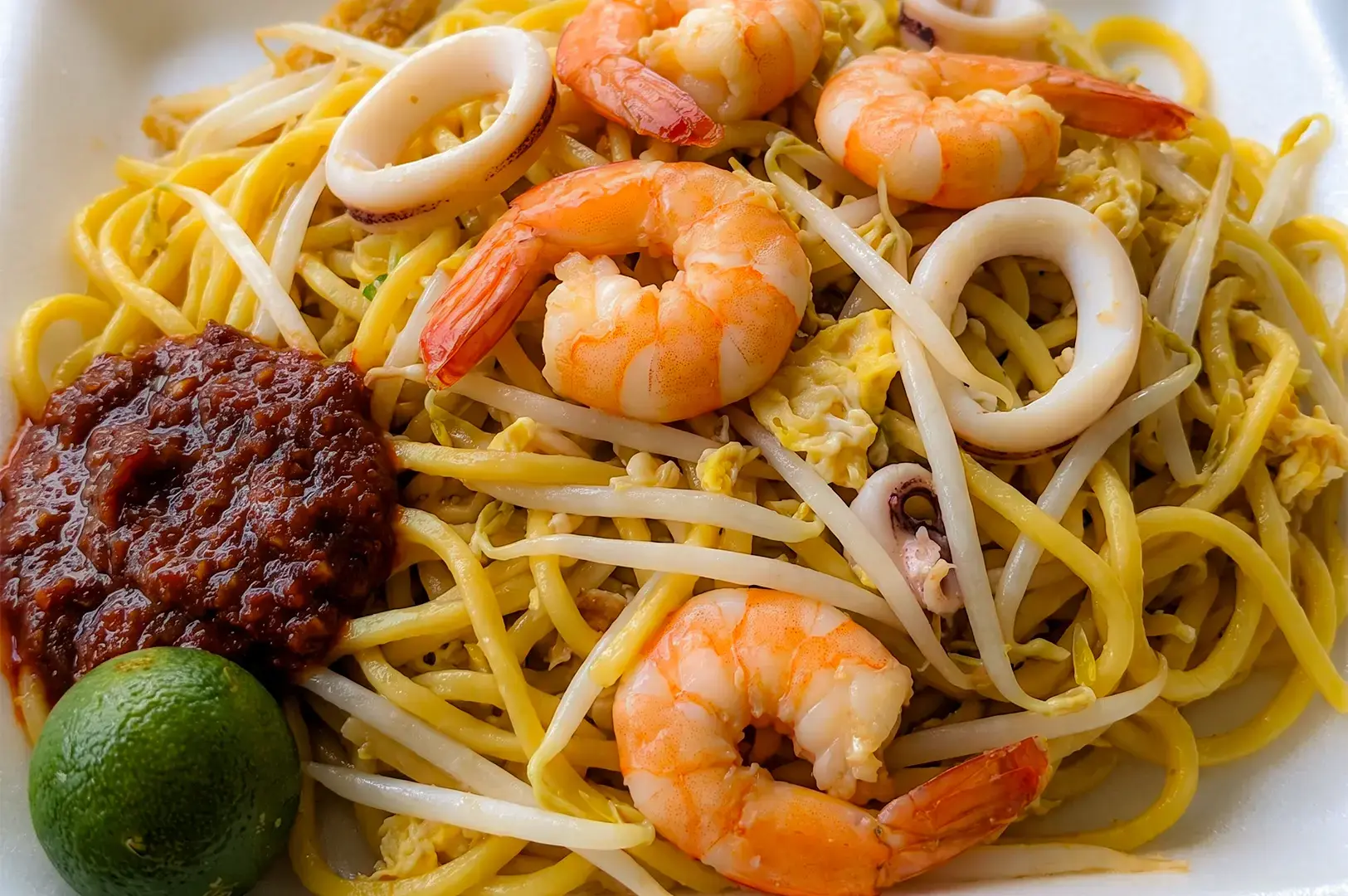
There is a particular smell that tells you hokkien mee is being cooked before you even see the stall.
It is the sweetness of prawn heads simmering into a deep seafood broth, the sound of noodles meeting a hot wok, and that brief smoky aroma that disappears almost as quickly as it arrives. Often, the aroma is enhanced by the sizzling of fried pork lard or pork lard, adding a rich, savory note.
When people talk about the best hokkien mee, the conversation rarely stays about one plate. It stretches across generations, neighbourhoods, and memories — from old-school stalls at hawker centres and market and food centres to modern mall food courts. Some of the best are found at places like Swee Guan Hokkien Mee at Geylang Lor 29, or the bustling Tiong Bahru Food Centre where the atmosphere is as vibrant as the food.
At Compass One, hokkien mee in Singapore appears in several forms. Some stay close to Singapore fried hokkien traditions, while others move towards Penang-style sotong prawn mee with stronger broth and chilli flavours.
This is not a ranking. It is simply a look at five ways of experiencing one of Singapore’s most familiar noodle dishes.
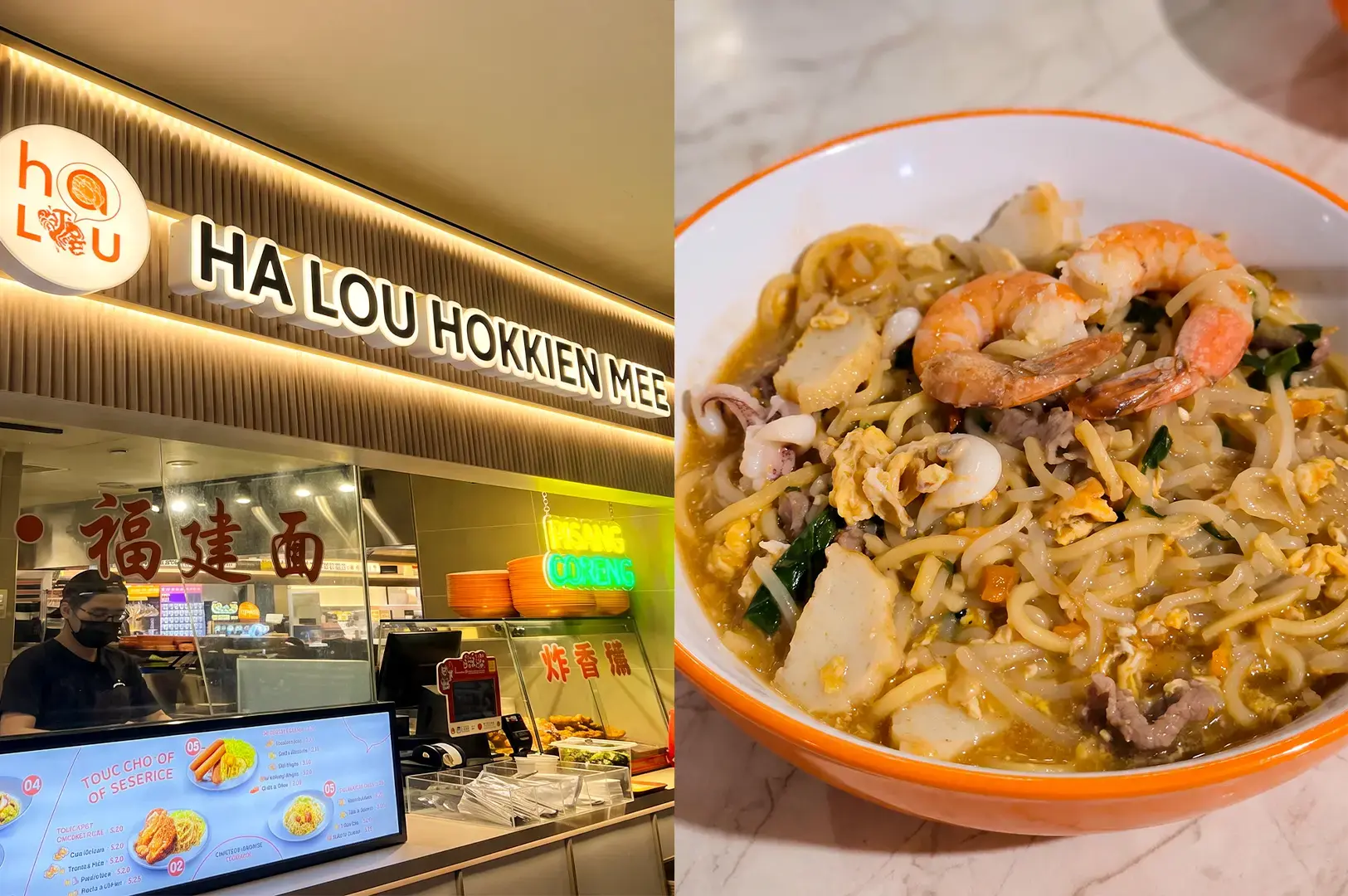
1. Ha Lou Hokkien Mee: A Focused Plate of Fried Hokkien Noodles
Best for: A straightforward hokkien mee craving when you want the familiar Singapore style
Price Range: $
Time Needed: 30 minutes to 1 hour
Must-Try: Fried Hokkien Mee
Location: Kopitiam @ Compass One
I like hokkien mee that knows exactly what it wants to be.
Ha Lou keeps the attention on the essentials — yellow noodles, bee hoon, seafood flavour, and the smoky character that comes from a proper stir fry.
The texture matters more than people realise. Some cooks use more egg noodles for a fuller bite, while others balance yellow noodles with thin bee hoon or thick bee hoon so the seafood broth can cling differently to each strand. Even the slight alkaline taste from yellow noodles becomes part of the identity of the dish.
A good plate of fried hokkien noodles should not simply taste oily. I look for that balance between seafood sweetness, moisture, and heat from the wok. The older tradition of cooking over charcoal fire adds another dimension, while small crispy bits where the noodles catch the wok can be especially satisfying. These crispy bits often come from the lard or fried pork lard added during cooking.
That is why I understand the fascination with established hokkien mee stalls like Swee Guan Hokkien Mee at Geylang Lorong 29, Kim Keat Hokkien Mee near Toa Payoh West Market, Hong Heng at Tiong Bahru Food Centre, and Ah Hock at Chomp Food Centre. The dish is simple, but repetition gives cooks room to master those small details.
Avoid if: You prefer a very wet hokkien mee style with lots of gravy.
Insider tip: Focus on how well the broth has been completely absorbed into the noodles.
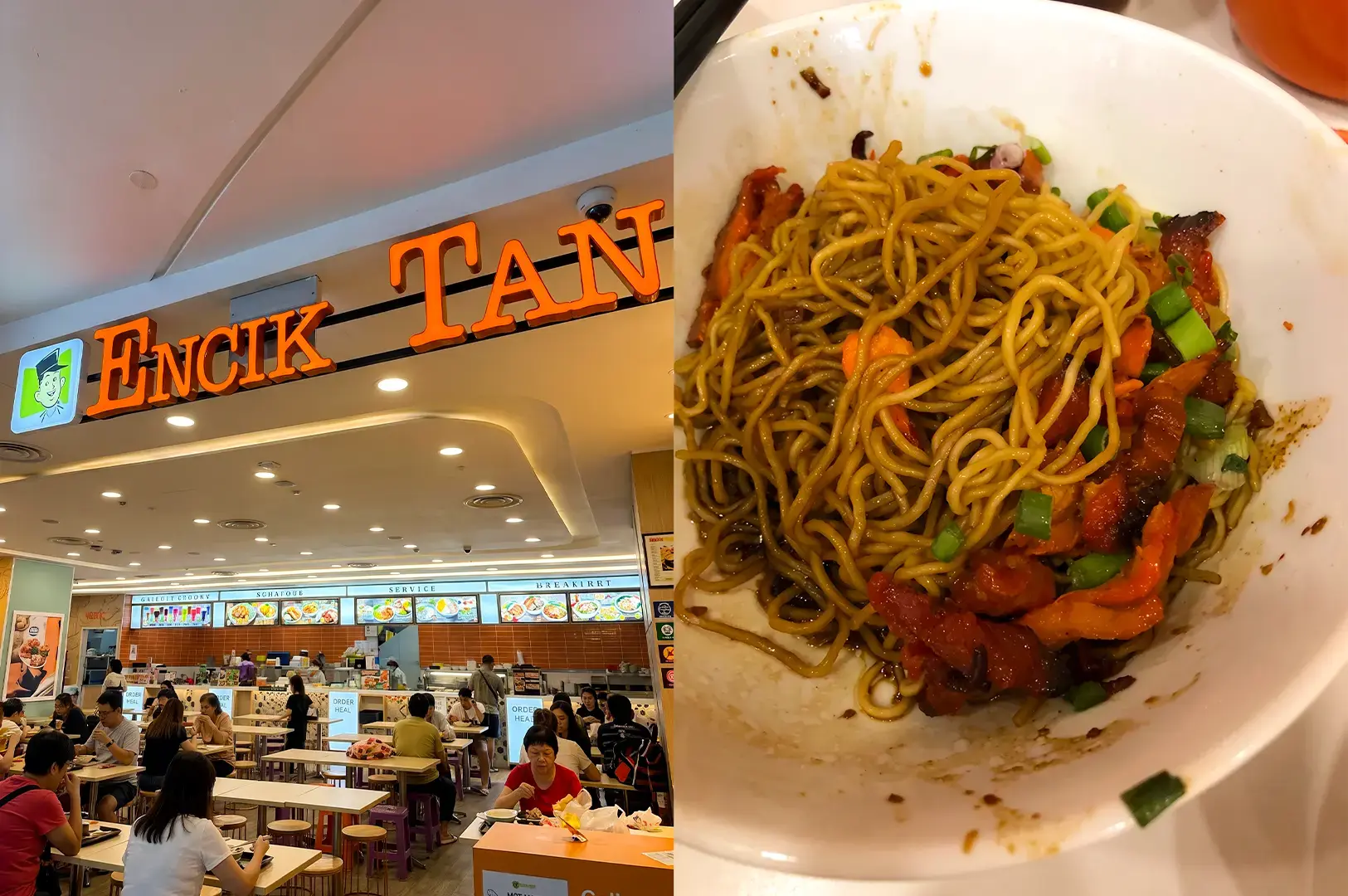
2. Encik Tan: When Fried Hokkien Prawn Mee Becomes More Indulgent
Best for: Diners who enjoy richer seafood flavours
Price Range: $$
Time Needed: 45 minutes to 1 hour
Must-Try: Fried Hokkien Mee variations
Location: Compass One
What makes hokkien mee interesting to me is how easily the balance can change.
At Encik Tan, the seafood side becomes more noticeable. For diners who enjoy fried hokkien prawn mee, the addition of prawns and other ingredients makes the plate feel more generous.
Across Singapore, different versions may include squid, fish cake, or pork alongside the noodles. Some become richer with pork belly, sio bak, or deep fried pork belly, while seafood-focused versions put more attention on prawns.
I think these additions are what make fried hokkien mee fun to compare. A little fried prawn can change the texture, while pork adds another layer of savouriness. The familiar combination of noodles, egg, seafood, and seasoning can feel quite different depending on what ends up on the plate. Often, a sprinkle of fresh spring onion and a squeeze of lime juice can brighten the dish further.
Avoid if: You want the simplest old-school hawker-style hokkien mee with minimal additions.
Insider tip: This is worth considering when you want something a little more indulgent than a straightforward plate of noodles.
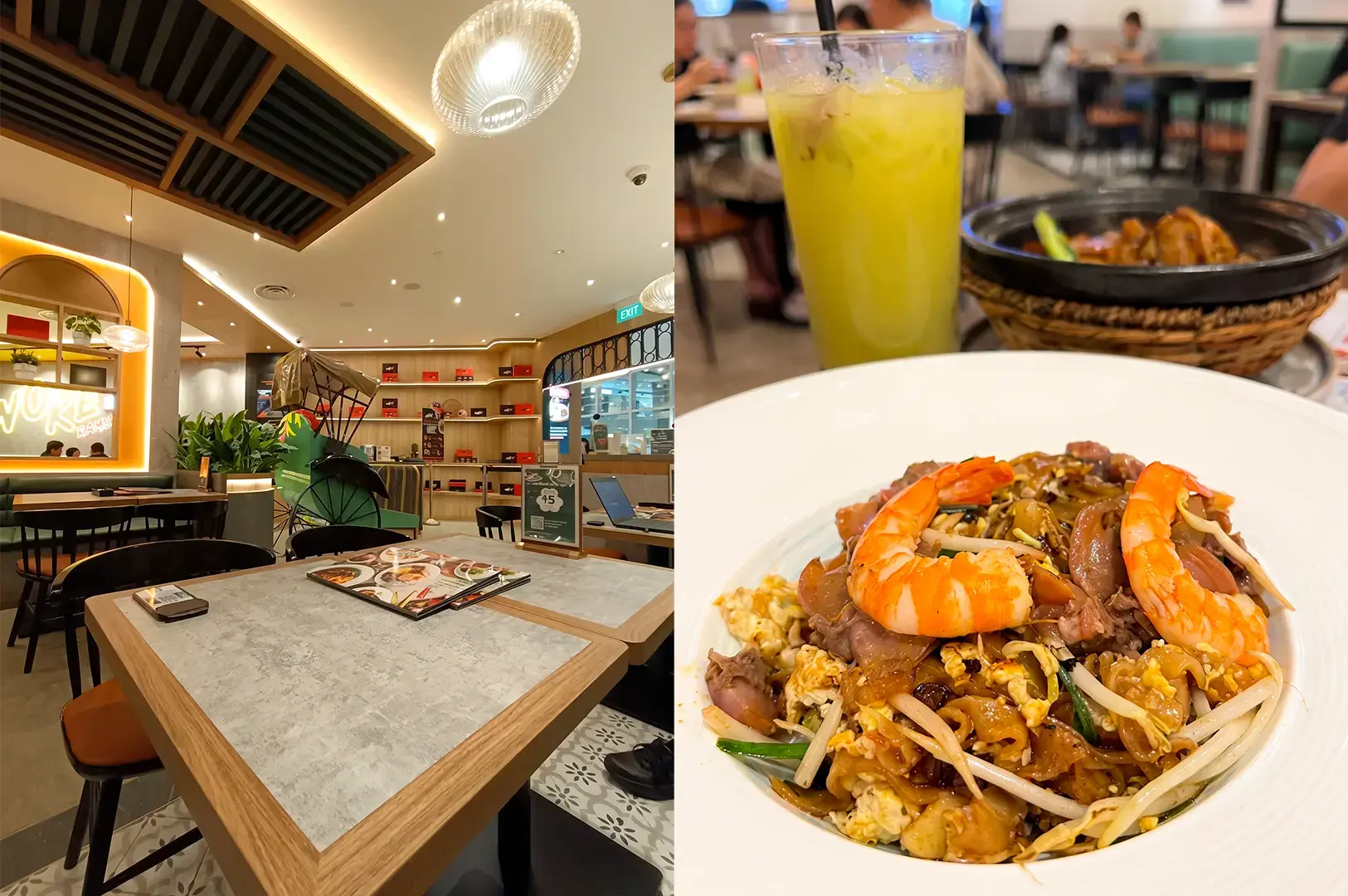
3. Penang Culture: A Different Story of Hokkien Prawn Mee
Best for: Diners who prefer broth-driven noodles and stronger spice
Price Range: $$
Time Needed: 45 minutes to 1 hour
Must-Try: Penang Hokkien Prawn Mee
Location: Compass One
This is where the name becomes interesting.
When many Singaporeans say hokkien mee, they imagine fried noodles cooked with seafood broth. But Penang Culture hokkien prawn mee tells a different story. Instead of the wok being the main focus, the broth becomes the centre of the dish. The prawns, noodles, and soup come together in a bowl where seafood depth is more immediate.
The spicy chilli or sambal adds another layer, creating a warmer experience compared with the darker, smokier Singapore-style fried version. If you prefer seafood dishes in a lighter, broth-based format, you can also explore notable fish soup spots around Singapore.
I like how this shows that similar noodle names can carry different histories. Singapore fried hokkien mee is about heat, frying, and absorption, while Penang hokkien prawn mee is about broth, spice, and seafood richness.
Beyond these versions, diners may also come across claypot hokkien mee or wet hokkien, where the noodles take on a different texture and finish.
Avoid if: You are only looking for dry, smoky Singapore-style fried hokkien mee.
Insider tip: Try this when you want to compare two different interpretations of the same noodle tradition.
Finding Your Hokkien Mee at Compass One
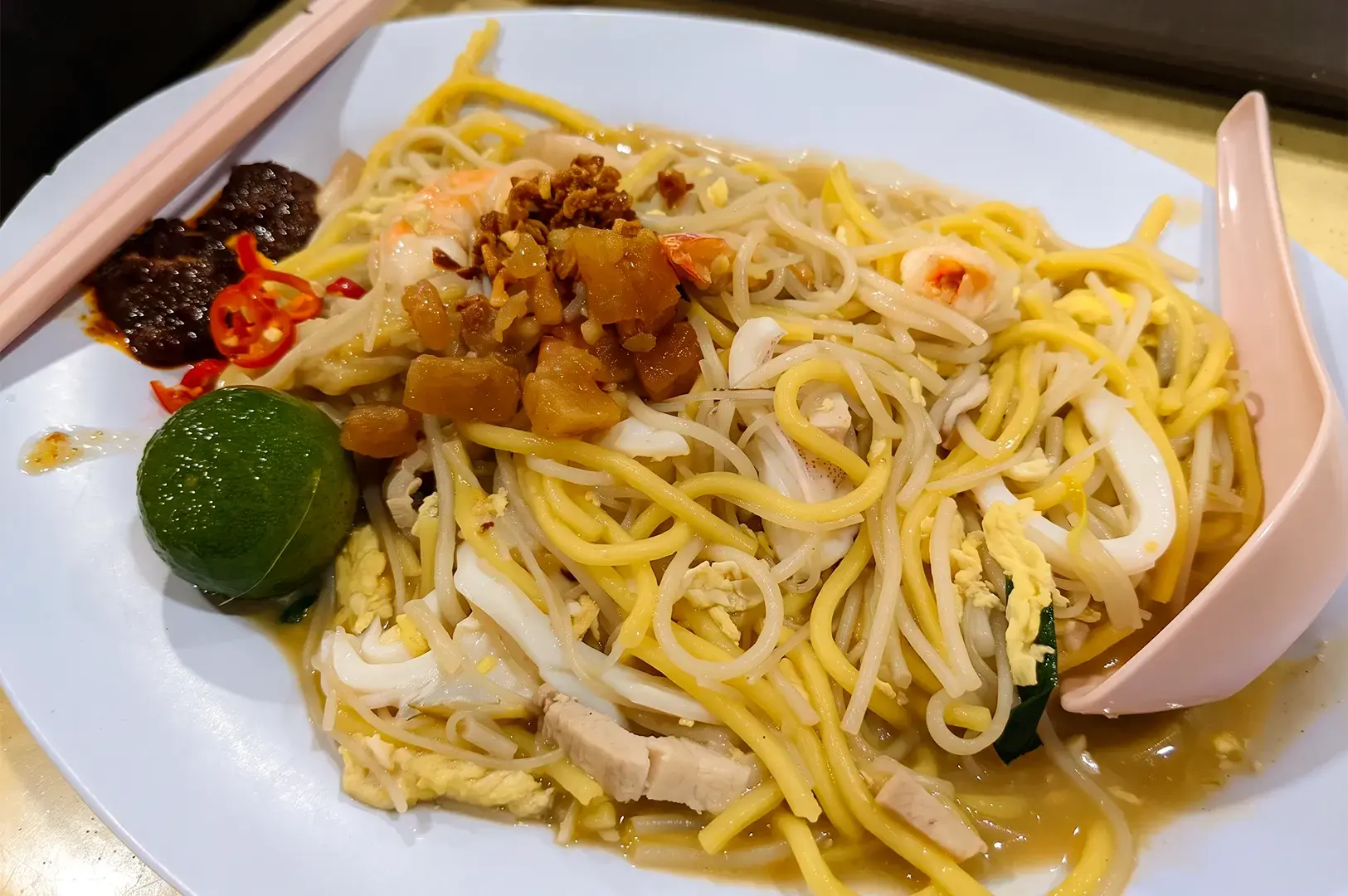
Five versions. Five different ways of understanding the same dish.
Some diners look for stronger wok hei. Others prefer noodles that are softer and more completely absorbed with seafood broth. Some want more prawn and seafood, while others prefer the comfort of noodles, egg, and seasoning.
That is what makes hokkien mee special to me.
From hawker centres to modern food courts, the dish continues changing while holding onto the same foundations. Whether you prefer fried noodles, wet hokkien mee, or broth-driven hokkien prawn mee, there is always another version to try.
Sometimes, it is simply the plate that gives you the flavour you were looking for that day. Whether you find yourself eating it at a lively food centre Singapore or a quieter corner along East Coast Road, the experience is always about the balance of ingredients — the subtle hint of garlic, the texture of noodles, and the freshness of seafood.
Even when you face a long wait, like the ones often seen at some famous stalls, it’s part of the ritual. The joy comes in tasting the layers of flavour, from the smoky wok hei to the tender prawns and the crispy bits of lard.