
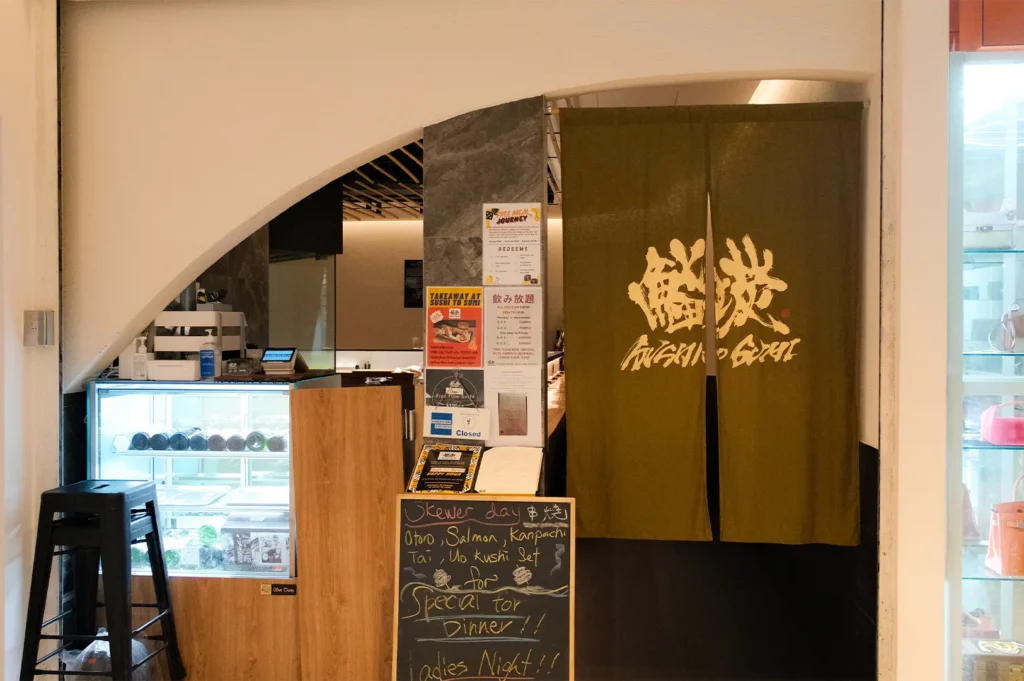
By the time I reached Raffles Place on a Thursday evening, the office crowd had begun to split in two directions: some towards the MRT, others towards dinner. I went upstairs at PLUS for the second kind of ending to the workday.
I had booked the free-flow sushi at Sushi to Sumi. “Free flow” usually makes me think about quantity first, which was partly why I was curious. But once dinner began, counting pieces quickly became the least interesting part of the meal.
What stayed with me was not how much sushi I could eat, but how clearly a few pieces distinguished themselves from everything around them.
Free-Flow Sushi Without the Buffet Feeling
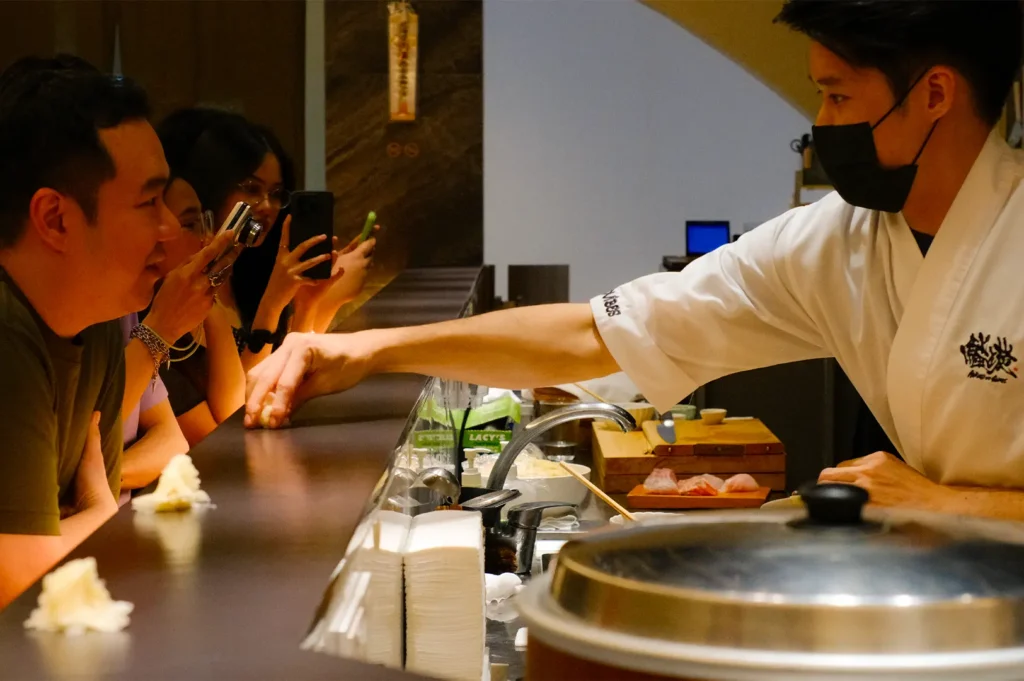
The current free-flow experience costs S$100++ for an hour. It begins with an Ume set of eight pieces before two premium sushi choices and the free-flow portion open up.
My first eight were akami, hotate, hamachi, tai, tobiko, aburakarei, salmon and nishin. For the premium choices, I went with chutoro and otoro.
After that, I returned to a few things I enjoyed and worked through some of the simpler rolls as well. There was hamachi, tai, more hotate, and eventually kappa, tamago and kanpyo rolls.
I stopped keeping track fairly early.
This does not feel like the usual free-flow arrangement where food waits in quantity for diners to collect it. The sushi still comes across the counter, piece by piece. There is abundance, but the meal never completely loses the character of a sushi dinner.
The Pieces I Kept Thinking About
The most interesting comparison happened almost by accident.
Akami came as part of the opening Ume set. It was the leanest of the tuna I ate that evening, with a firmer texture and a cleaner taste that left more room for the seasoned rice underneath to show itself.
Later came chutoro, and then otoro.
Eating the three within the same dinner made their differences much easier to understand. The chutoro was softer and richer than the akami without losing the character of the tuna itself. Otoro moved further in that direction, with a fuller texture and noticeably more fat.
By then the rice mattered even more. Its seasoning gave the richer fish something to push against rather than letting the entire bite become about fat.
I have eaten all three cuts before, but having akami, chutoro and otoro close together made the progression feel unusually clear.
Hotate was memorable for almost the opposite reason. The scallop was softer, sweeter and much gentler. After the tuna, I liked the change of pace enough that I went back to it once the free-flow portion began.
Then there was nishin. Herring is not usually the first fish I think of when someone mentions sushi in Singapore, which was precisely why I liked seeing it in the initial set. It had a richer, oilier character than the tai or salmon, with a more pronounced taste that made it difficult to confuse with anything else on the plate.
The other pieces filled out the meal without needing a paragraph each. Towards the end, even a simple kanpyo roll felt welcome. After fatty tuna and repeated rounds of fish, seasoned gourd and rice were enough.
Where the Fish Story Starts
The meal became more interesting once I looked into what sits behind the restaurant.
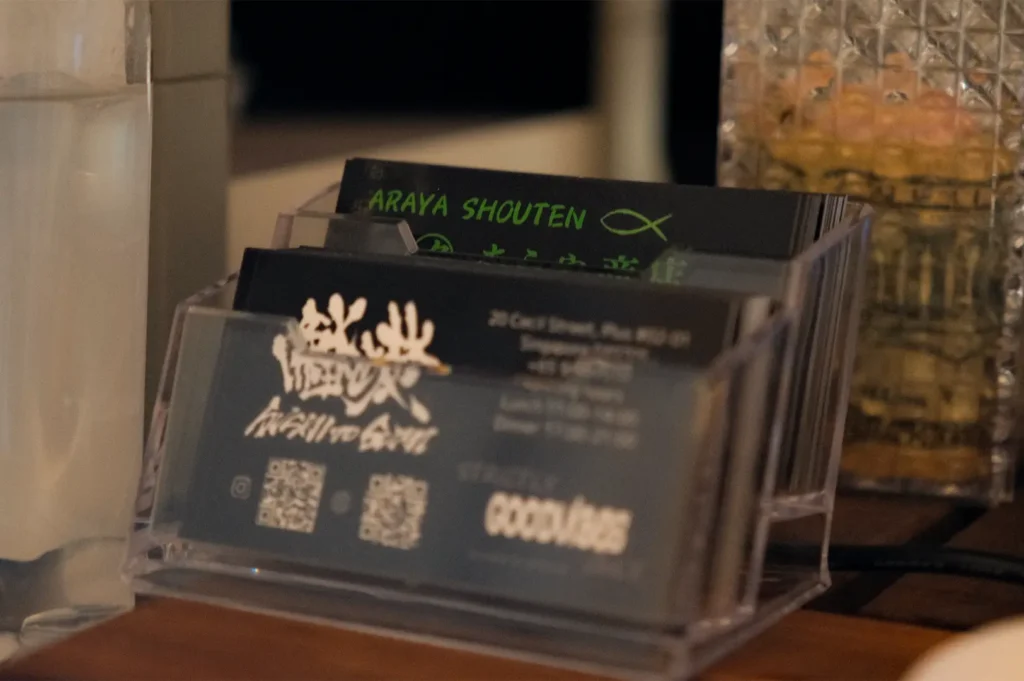
Sushi to Sumi is closely connected to Araya Shouten, the Japanese fishmonger founded by Araya-san. He was born in Hokkaido and comes from a fishing family; his grandfather was a commercial fisherman in Kushiro.
That history matters less as a romantic origin story than as an explanation of how the restaurant thinks about fish.
Araya Shouten built its reputation around sourcing and handling Japanese seafood, including supplying Michelin-starred kitchens in Singapore. Sushi to Sumi extends that knowledge towards everyday diners.
There is an important distinction here. Not every fish at Sushi to Sumi necessarily passes through Araya Shouten, as the chef also works with his own supply lines. What connects the two more strongly is the standard: knowing what is in season, what condition the fish is in, and when something is worth putting on the counter at all.
Good sushi begins before the rice is shaped. Much of its quality has already been decided at the source. I have written before about how some of Singapore’s most interesting Japanese food counters are built around specialists doing one thing carefully, and Sushi to Sumi reminded me of that same ingredient-first mindset.
For someone like me, who is often interested in the people and continuity behind a meal, that made the food easier to understand.
Is Sushi to Sumi One of the Best Sushi Restaurants in Singapore?
“Best” becomes complicated when we talk about sushi. It is easy to attach the word to the longest omakase, the hardest reservation to secure or the counter with the largest bill at the end.
My Thursday dinner made me think about it differently.
Sushi to Sumi is not trying to reproduce that kind of restaurant. Lunch still draws on the tachigui tradition of standing sushi, while evenings bring out chairs and allow the counter to settle into a more relaxed rhythm.
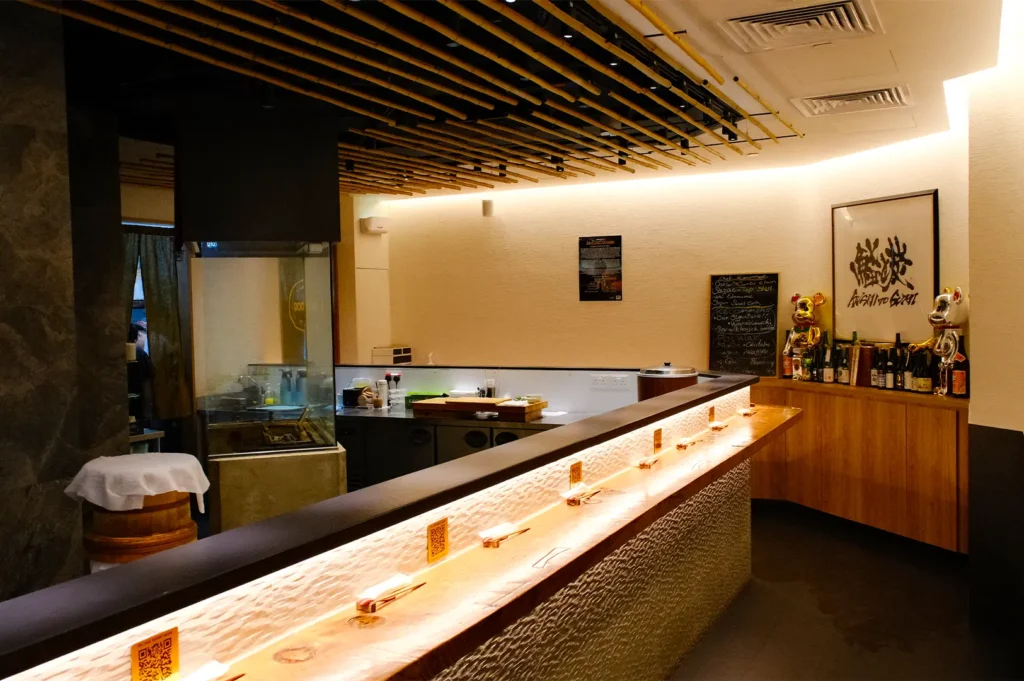
The free-flow format takes that accessibility another step further. I could return to the hotate I liked instead of accepting that one piece was my only encounter with it. At the same time, beginning with a fixed Ume set meant I still tried fish I might not have ordered immediately for myself, particularly the nishin.
For its combination of fish quality, sourcing knowledge and an approach that makes serious sushi easier to return to, Sushi to Sumi is now one of my strongest answers when someone asks me about the best sushi restaurant in Singapore.
It does not need dinner to feel grand in order for the fish to feel important.
Before You Go
The current S$100++ free-flow programme runs from Monday to Friday, with one-hour sessions at 5pm, 6pm and 7pm. Places are limited each day and bookings for this particular menu are made through WhatsApp. One drink is included.
Beyond free flow, Sushi to Sumi also serves other lunch, dinner and seasonal Japanese offerings, so I would check the current menu before deciding how you want to eat there.
The restaurant is at 20 Cecil Street, PLUS #02-01, Singapore 049705. If you are planning your own after-work dinner around Raffles Place, there are more practical details here.
When I stepped back onto Cecil Street, Thursday evening was still moving at its usual pace. Dinner had not required a special occasion or an entire evening arranged around it.
I think that was part of what I liked.
Good sushi does not always need more ceremony. Sometimes it needs excellent fish, properly understood, and enough attention for you to notice the difference.