
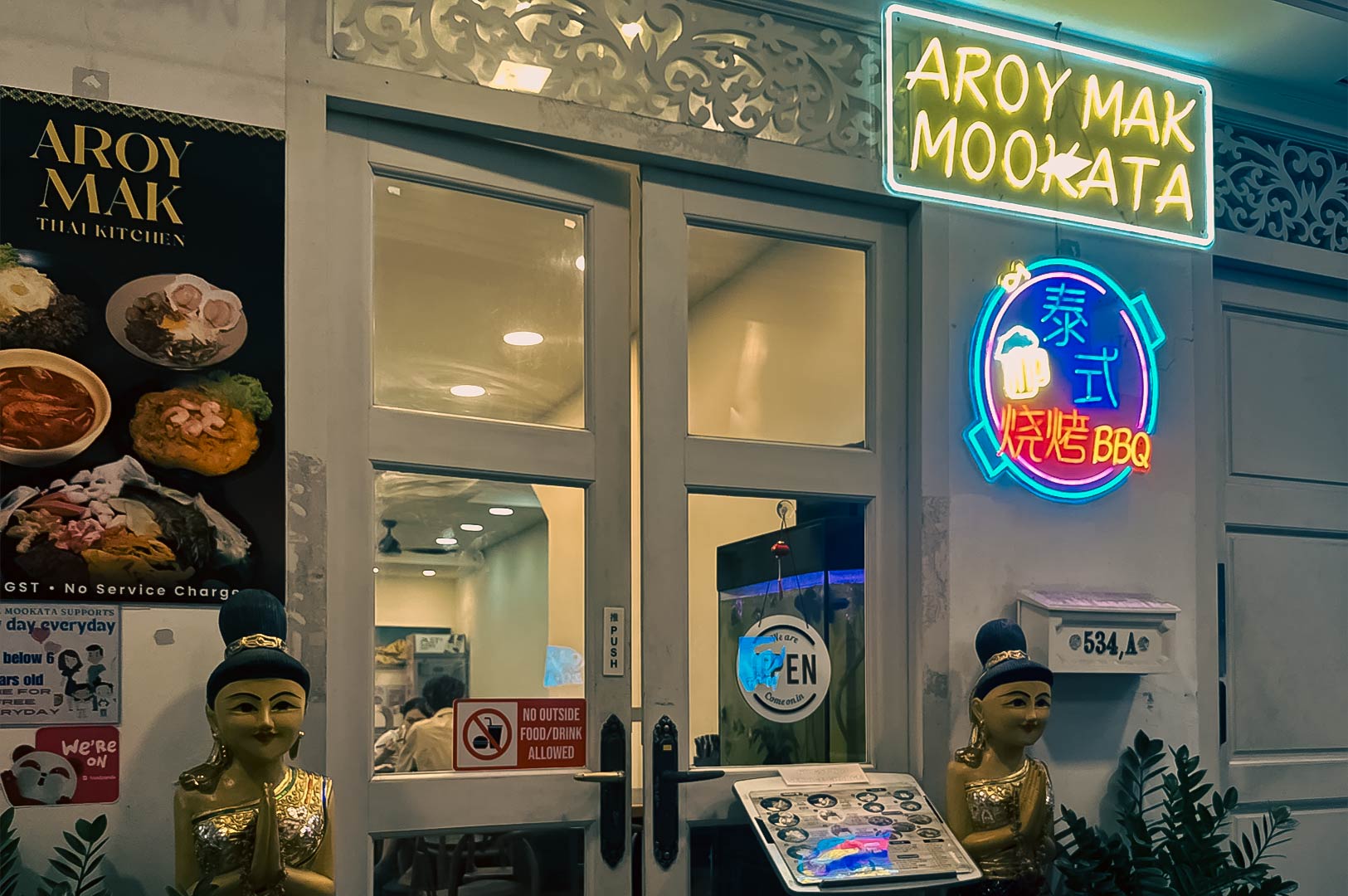
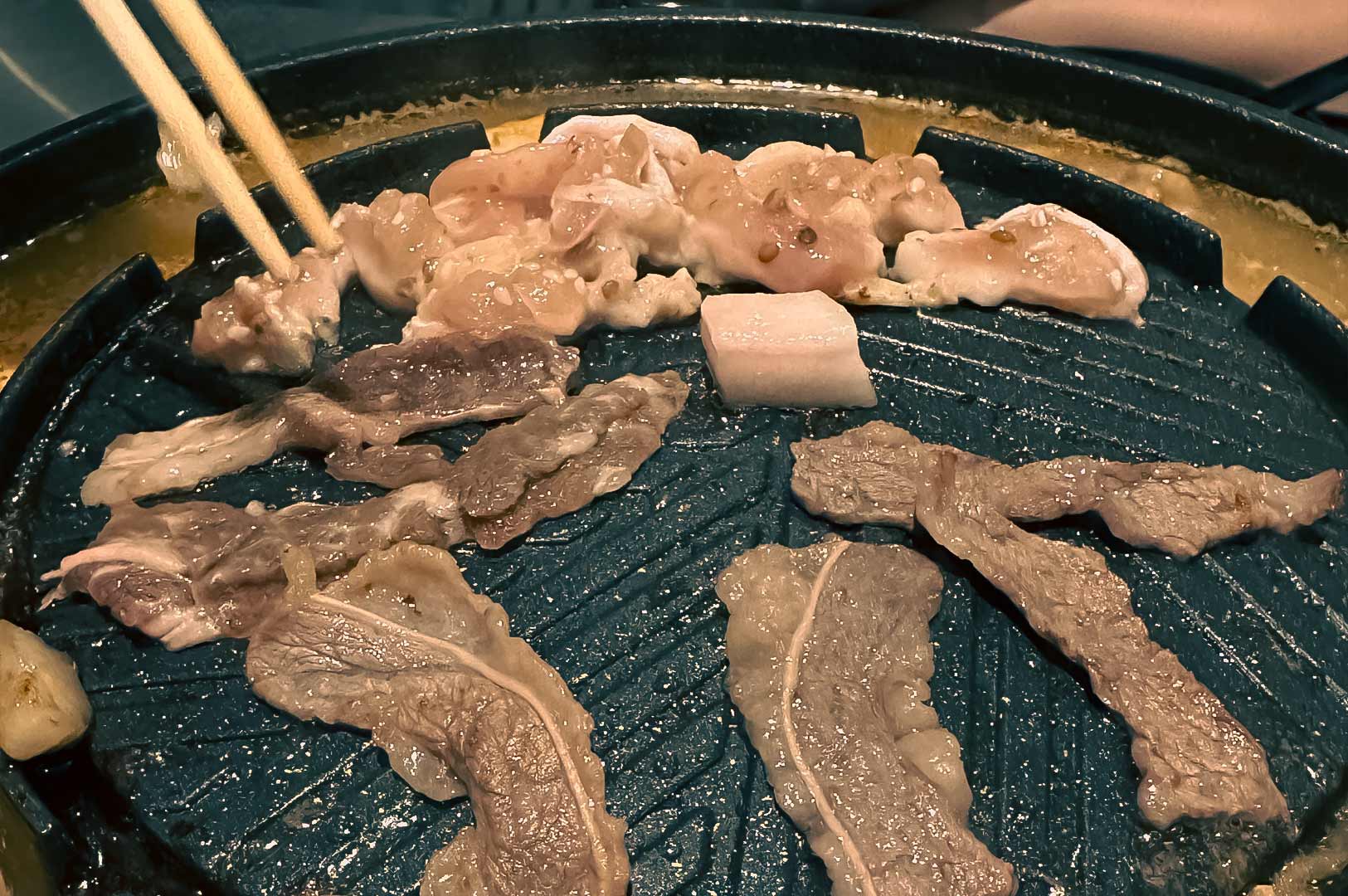
At Aroy Mak, the start of the evening is marked by a distinctive sound that signals the beginning of the meal. It is not the clatter of cutlery or the murmur of conversation, though those are present. It is the quiet, steady sizzle of a cube of pork lard sliding down the heated dome of a brass skillet. This small, sacrificial piece of fat is the opening ceremony of the meal. As it melts, coating the metal in a glistening sheen, the diners around the table lean in, ready to enjoy the meal together.
Their attention shifts from their phones, their workdays, and the bustling mall corridor outside, converging on the glowing center of the table. This moment marks the start of a shared dining experience that embodies the spirit of mookata Singapore, a celebration of Thai cuisine and the communal joy of cooking and eating together.
Bring your friends or family to fully enjoy the mookata experience, as sharing a feast makes it even more memorable. Mookata is a Thai Barbecue Steamboat concept that originated in Northern Thailand.
Mookata Singapore: A Family Style Dining Experience
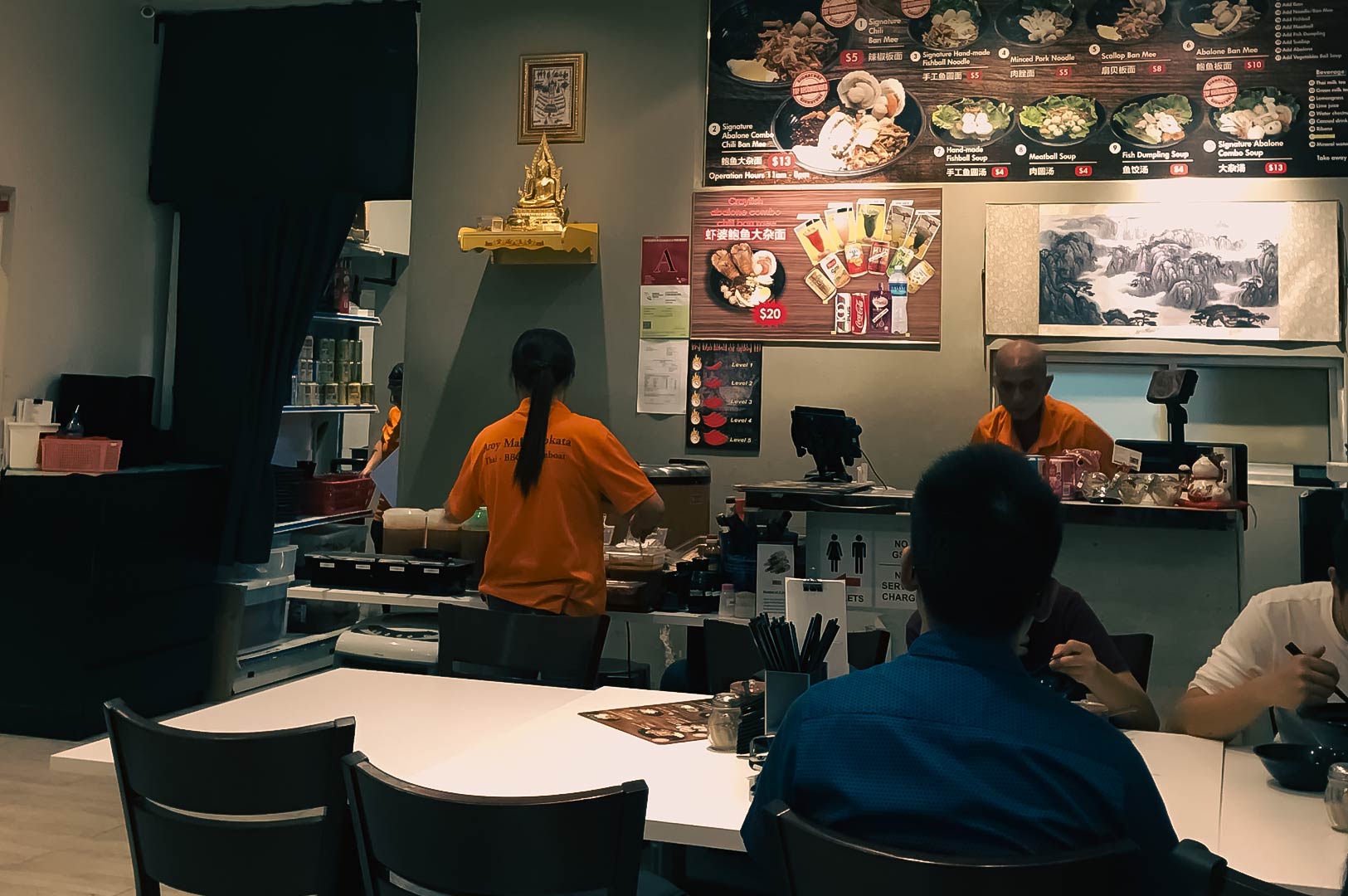
Mookata is more than just a meal; it is a social ritual deeply rooted in Thai cuisine and culture. Generous portions and a lively communal atmosphere are expected, making it perfect for groups who want to share and connect over food. Thai people have long embraced family style dining, where shared dishes and generous portions encourage connection and conversation.
The table is set not with individual plates but with a variety of dishes meant to be enjoyed collectively—grilled pork, fish balls, spicy soups, and stir fries—all accompanied by rice and dipping sauces that balance sweet, sour, and spicy flavors. In Thailand, it is typical for all dishes to be served at once rather than in courses, enhancing the communal dining experience.
The Role of Standard Utensils and the Art of Eating
In this setting, diners use the standard utensils of Thai dining: the spoon and fork. The fork is primarily used to push food onto the spoon, and can also be used together with the spoon to cut food into smaller pieces if needed. The spoon is the main utensil for eating, while the fork acts similarly to a knife in Western dining. This utensil usage reflects the thoughtful balance and respect embedded in Thai dining etiquette. While fingers are sometimes used to dig into sticky rice or shared dishes, the spoon and fork remain essential tools for managing the variety of textures and flavors presented.
Enjoying Mookata Like Thai People
When planning your mookata meal, remember to start with a variety of dishes that offer a balance of flavors—spicy curry, sweet dipping sauces, and sour salads. It’s important to pace yourself, enjoying each course slowly to savor the evolving flavors and textures. Don’t rush to fill your plate; instead, take small portions and continue to dig in gradually, allowing the flavors to mingle.
In Thailand, it is customary to start eating only after the eldest person at the table begins. Watching how Thai people manage their meal can be a valuable lesson in appreciating the art of shared dining. Take the opportunity to learn from Thai dining etiquette to enhance your mookata experience.
The Flavorful Journey of Thai Food at Mookata Singapore
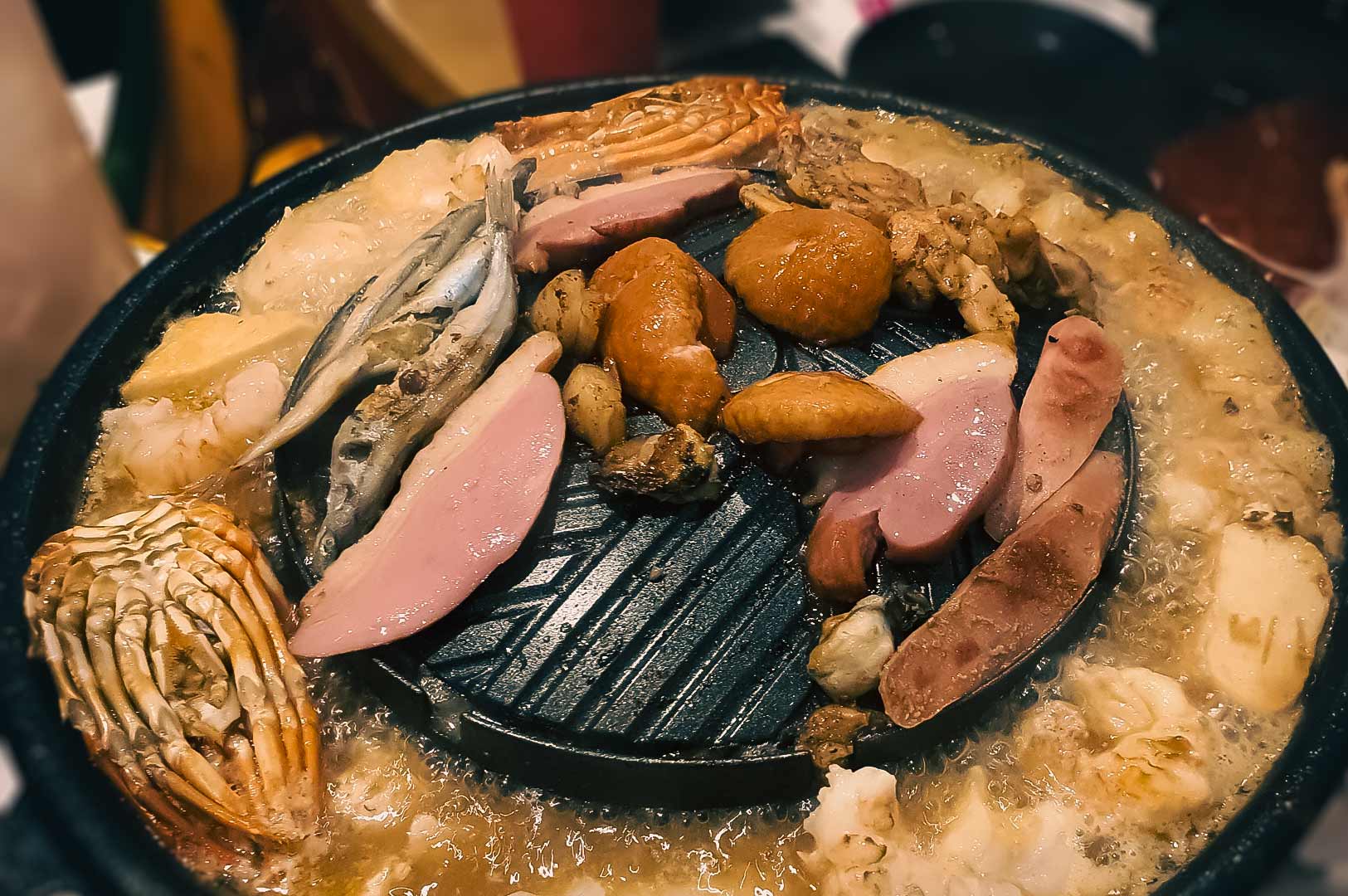
Every bite at the mookata table offers a chance to dive into the rich flavors of Thai cuisine. Combining elements of Korean BBQ and Chinese Hotpot, mookata features grilling and simmering with fresh vegetables, succulent seafood, and tender meats, creating a harmonious dining experience. Rice, a staple in Thai cuisine, is served alongside, balancing the generous portions and shared dishes that make mookata a beloved tradition among Thai people and a must-try in Singapore’s vibrant restaurants scene.
More than casual dining, mookata is a social ritual of cooperation, patience, and negotiation. In a fast-paced city, it demands time and attention, transforming a meal into a shared experience that connects friends and colleagues. At Aroy Mak, this ritual is celebrated as diners engage in the unspoken rules of shared cooking and eating, turning individual diners into a collective unit united by the communal joy of mookata Singapore.
Dining at Aroy Mak
At Aroy Mak, the quiet ritual of Thai dining unfolds steadily around tables that have witnessed countless shared meals. The restaurant carries forward something essential about Thai cuisine—not merely its flavors, but its deeper understanding that food exists to bring people together.
Here, generous platters arrive bearing the familiar comfort of aromatic stir fries and rich curries, each dish quietly asserting its place in a tradition that has traveled far from its origins yet remains unchanged in spirit. The signature mookata bubbles at the center of tables, its gentle steam carrying stories of community and care that extend well beyond the walls of this welcoming space.
The act of ordering here feels deliberate, unhurried. Groups gather around menus not to divide but to unite—selecting dishes meant to be shared, tasted, and discussed. There is something profoundly Thai in this approach, this understanding that a meal should be a conversation between flavors and people alike. Spicy sauces and condiments sit quietly at each table, waiting to transform each bite according to individual preference while maintaining the collective spirit of the feast.
For more insights and recommendations on dining experiences across Singapore’s shopping malls, visit our SG Malls Dining Guide and discover your next great meal destination.
The Rhythm of Patience and Pacing
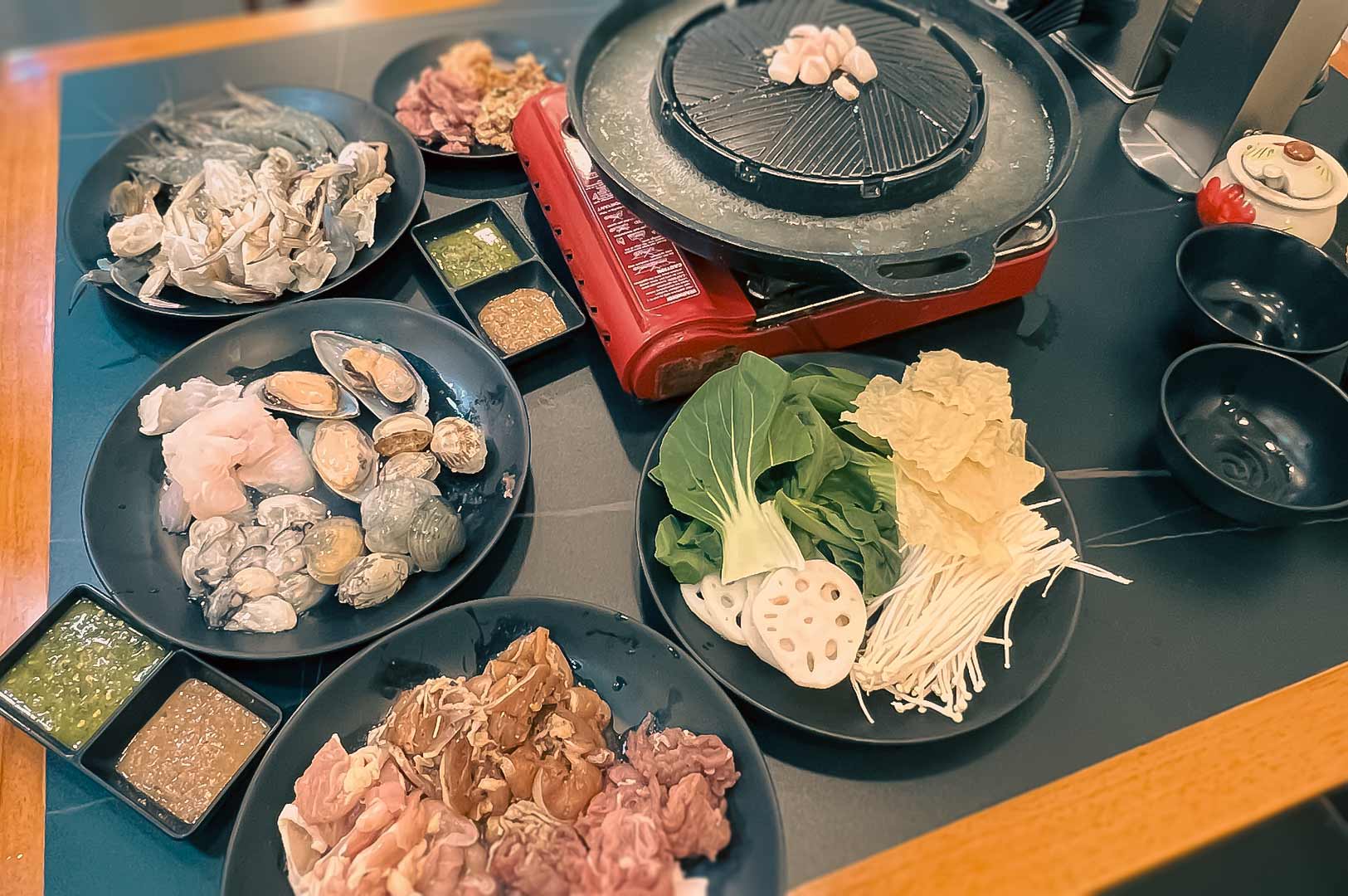
Mookata is not fast food. In fact, it is aggressively inefficient by modern standards. The dome has a limited surface area; you can only cook so much at once. The soup takes time to absorb the juices of the grilling meat. This inherent slowness is its greatest feature.
In the ecosystem of Mookata Singapore, pacing is everything. You cannot rush the process. This forced deceleration changes the cadence of the evening. Because you cannot eat immediately, you talk. The gaps between batches of meat become spaces for storytelling, for venting, for catching up. Diners often find themselves going back for seconds, especially for the most flavorful sauces or dishes, enhancing the communal experience.
Observe a table at Aroy Mak for an hour, and you will see a distinct rhythm emerge:
- The Initial Scramble: High energy, hungry reaching, the loading of the grill. Conversation is sparse, focused on logistics.
- The Simmer: As the first round is consumed, the pace slows. The soup begins to bubble. Shoulders drop. The conversation deepens.
- The Lull: The grill is scraped clean for a second round. Refills are ordered. This is often when the most significant conversations happen—in the quiet anticipation of the next wave.
- The Grazing: The hunger is gone, but the ritual continues. Diners pick at glass noodles, sip the intensified broth, and linger. Many mookata places offer unique options like cheese dips for dunking grilled meats and specialty noodles added to the broth, making the grazing phase even more enjoyable.
This rhythm allows the meal to breathe. It transforms eating from a biological necessity into a sustained social event. In a culture that often glorifies “optimizing” time, mookata is a celebration of spending it.
Conversation Through Negotiation
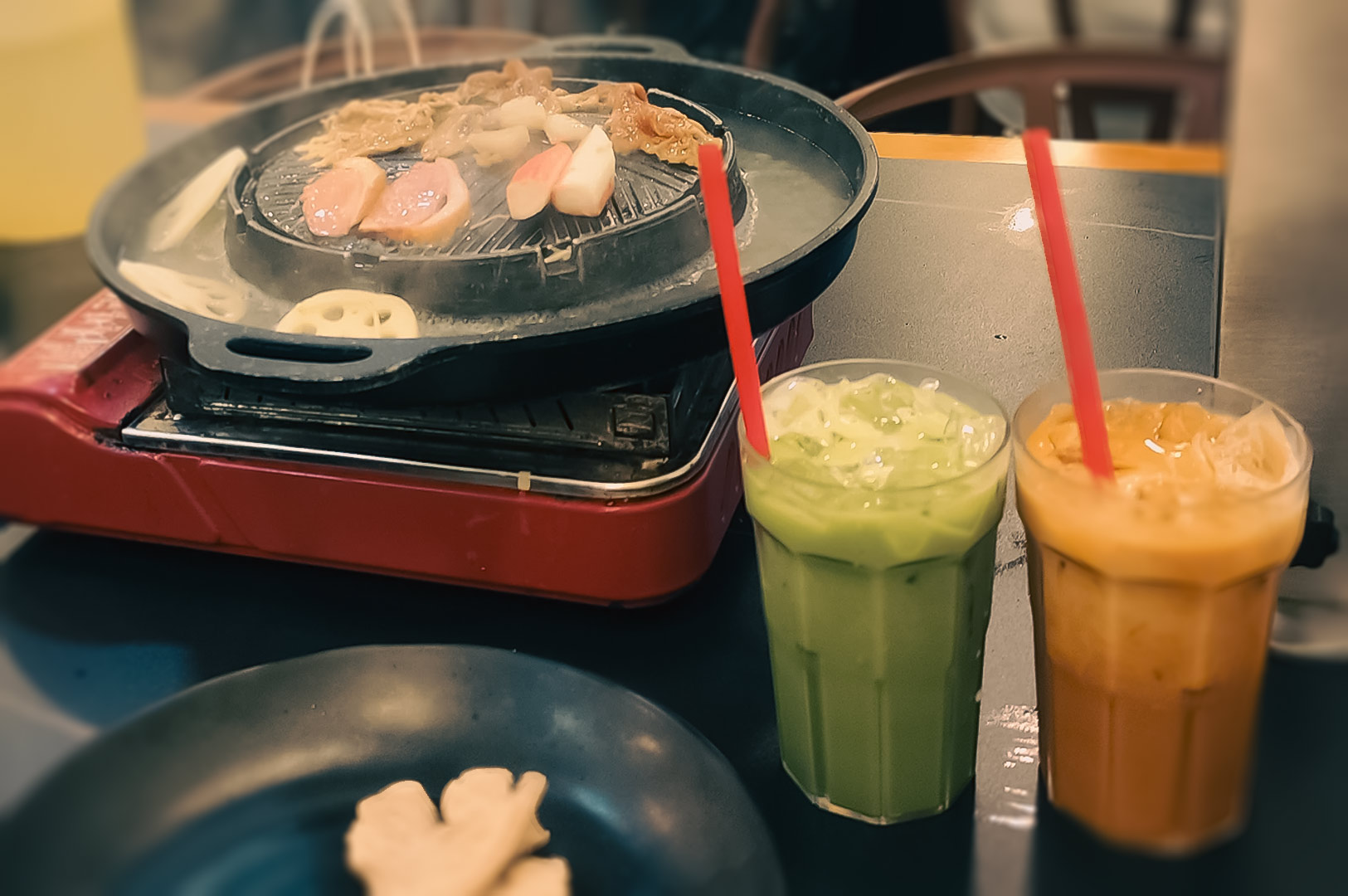
There is a unique vernacular to the mookata table. It is a language of small negotiations and checks.
“Is this chicken done?” “Don’t put the liver in yet, it will make the soup cloudy.” “Who wants the last piece of prawn?” “Move your beef, I need space for the mushrooms.”
These micro-interactions might seem trivial, but they are the threads that weave the social fabric of the meal. They require eye contact and awareness. You have to notice what your neighbor likes. You have to ask permission to take up space. You have to offer food before serving yourself. In Thai dining etiquette, there are certain things to do and things to avoid, such as always offering food to others before serving yourself and being mindful not to double-dip sauces.
At Aroy Mak, where the atmosphere is boisterous and the air is thick with the scent of garlic and chili, these negotiations happen loudly and joyfully. It breaks down social reserves. It is hard to maintain a stiff, formal persona when you are debating the placement of a fish ball or dodging a splatter of oil. The messiness of the meal humanizes everyone at the table. It levels the playing field, making it as comfortable for a first date as it is for a ten-year friendship.
Thai cuisine is renowned for its spiciness, which can be overwhelming for those unaccustomed to it, but it's perfectly acceptable to request dishes to be made 'not spicy' in Thai restaurants.
Cultural Significance of Mookata
Something quietly endures in the way families gather around the familiar dome of a mookata grill, steam rising steadily as the evening settles. This tradition is lived in the unhurried rhythm of hands reaching for ingredients and the gentle choreography of sharing that unfolds naturally when people take time to cook together. At weddings and holidays, these moments repeat, reminding us that meaningful exchanges happen when we slow down to tend both fire and fellowship.
There is a reverent approach to each dish, with diners thoughtfully sampling what has been prepared with care. Gratitude is expressed through these small rituals—toward the person managing the grill and the host who understands that bringing people together is its own kind of craft. In the familiar warmth of shared cooking, mookata becomes more than sustenance; it honors the connections formed by a meal prepared with intention.
Conclusion
We often talk about food in terms of flavor profiles, ingredient sourcing, and culinary technique. But places like Aroy Mak remind us that the primary function of a meal is often connection. The food is merely the medium through which we relate to one another.
Mookata endures as a dining ritual because it answers a fundamental human need: the need to gather around a fire and share. It turns the passive act of being served into the active joy of creating together. It slows down the clock, forcing us to sync our rhythms with the people we care about.
The next time you find yourself walking through the mall, looking for a place to eat, consider the mookata grill. Do not go just for the marinated pork or the chili sauce. Go for the ritual. Gather your friends, claim a table, and watch how the simple act of cooking meat on a dome changes the quality of your conversation. Notice the rhythm. Linger over the soup. In the glow of the grill, you might find that the best thing you are making is time for each other.