
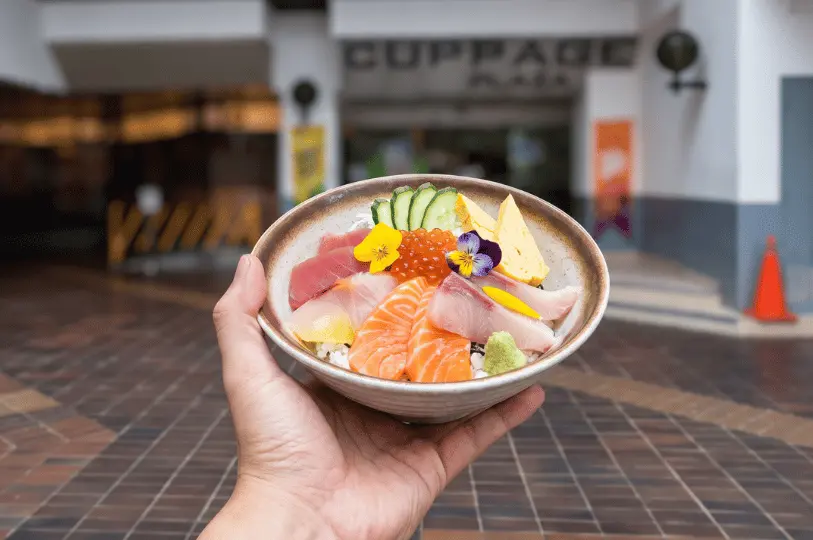
The first time someone brought me to Cuppage Plaza, I almost walked past it.
It sat there off Orchard Road, a little worn at the edges, nothing like the polished malls nearby. My friend just said, “Trust me,” and led me up a quiet stairwell that smelled faintly of grilled fish and soy sauce.
Then a door opened. A tiny counter. A chef with his sleeves rolled up. A chirashi bowl sitting in front of a regular who clearly didn’t need a menu.
I’ve been coming back for years. And I’ve learned that this building tells you nothing from the outside. You have to go in.
If you’ve ever wondered why so many people head here for Japanese cuisine when Orchard has malls three times the size, let me walk you through it. Honestly, and from experience.
How a Small Building Became a Japanese Cuisine Landmark
Cuppage Plaza never set out to be famous. That’s part of its charm.
While big malls filled up with chains, this place quietly did the opposite. Its small units suited independent operators, the kind of chefs who wanted to run one counter and do one thing well. Over time, that drew in sushi specialists, izakayas, sake bars, and omakase rooms seating eight on a good night.
Singapore’s long-standing Japanese business and expat community created real demand for authentic food. Chirashi sushi, scattered sushi bowls, raw fish over seasoned sushi rice, all of it found a home here. The location made sense. The rents made sense. And slowly, a reputation grew.
What kept it alive wasn’t hype. It was consistency. Regulars came back because the same chef remembered how they liked their sashimi sliced, or whether they wanted ikura salmon roe tucked in beside the tamago.
It’s Not Just Omakase: From Chirashi Don to Kaisen Don
Here’s a myth I hear often: that Cuppage Plaza is only for people ready to drop hundreds on dinner.
Not true. I’ve eaten here on a tight budget more times than I can count.
- Casual meals ($20 to $50 per person)
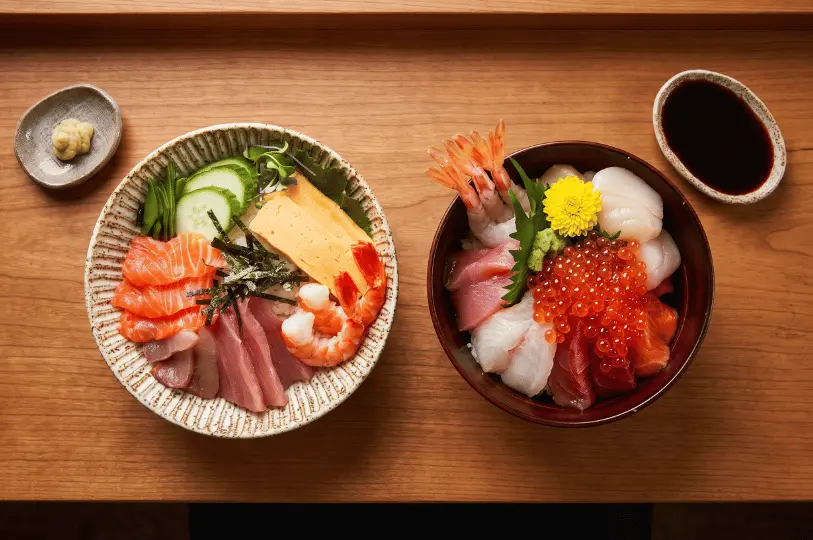
Chirashi don, donburi, ramen, izakaya plates. A chirashi bowl heaped with sashimi grade fish over Japanese short grain rice is one of the most satisfying things you can eat at this price point. - Mid-range dining ($40 to $80 per person)
Chirashi kaisen don and kaisen don bowls featuring tuna, salmon, surf clam, and cooked seafood like rolled omelette or lotus root. More care, more variety, still approachable. - Premium experiences ($150 to $300 and beyond)
Omakase and chef’s counter sushi. The kind of meal you plan around a birthday. Nigiri placed one piece at a time, raw seafood with a precision that takes years to learn.
Insider knowledge: A small sushi bar can look casual and still charge premium prices. The size of the room tells you nothing about the bill. Always check the menu before you sit down.
Understanding the Chirashi Bowl: Scattered Sushi and What It Actually Means
Before I understood what I was eating, I used to order chirashi don based on how colourful the bowl looked. That was a mistake.
Chirashi, which translates roughly as “scattered sushi,” is a dish rooted in Japanese cuisine with two main styles worth knowing.
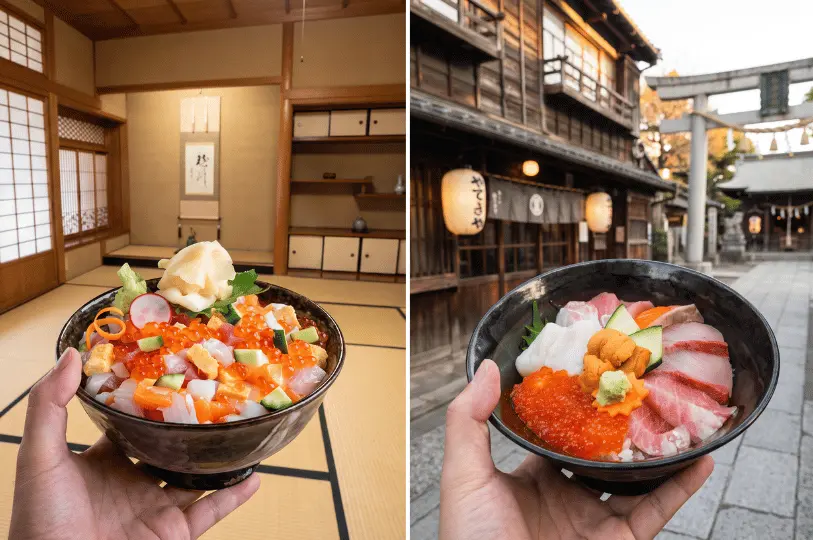
Bara chirashi comes from the Kansai region. The fish, vegetables, and other ingredients like cucumber, avocado, bamboo shoots, and seasoned vinegared rice are all mixed together. Cooked rice is flavoured as sushi rice using Japanese rice vinegar, and the toppings are folded in rather than placed on top. It’s a festive dish, traditionally associated with Girl’s Day in Japan, and the presentation is more rustic than composed.
Kaisen don, more common in the Kanto region style of chirashi, presents tuna, salmon, flying fish roe, ikura salmon roe, and raw fish as neat slices over plain white rice or vinegared rice. It’s visually clean, closer to what most Singapore diners picture when they think of a chirashi bowl.
Both are delicious. Knowing which one you’re ordering helps you set the right expectations.
The Role of Sushi Rice in a Good Chirashi Don
This took me embarrassingly long to understand. The rice is as important as the fish.
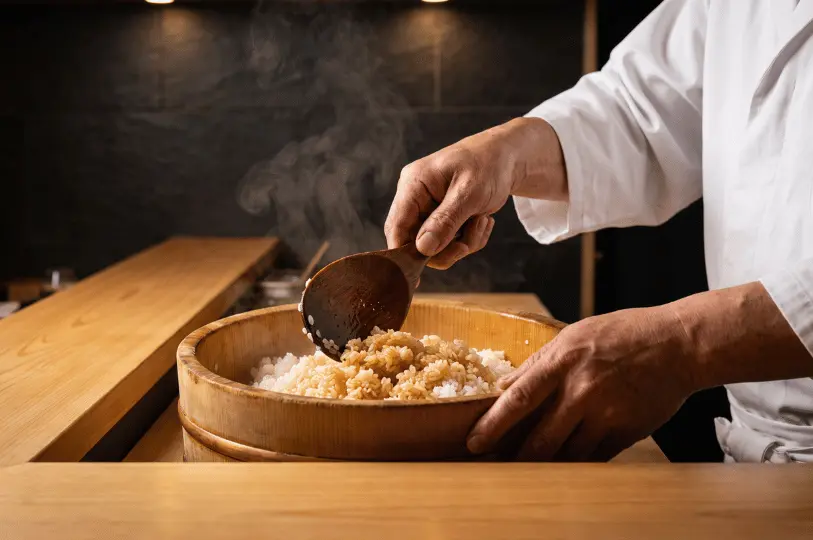
Good sushi rice starts with Japanese short grain rice. When rice cooks, the starch behaves differently from other varieties, giving it that slightly sticky, tender texture that holds together without going gummy. Once cooked, the rice is seasoned with rice vinegar, a little sugar, and salt to create what Japanese chefs call vinegared rice or seasoned sushi rice.
A chirashi don built on poorly made sushi rice is a disappointment no matter how good the toppings are. I’ve had bowls with beautiful sashimi grade fish sitting on cooked rice that tasted like plain white rice with no seasoning at all. The whole thing fell flat.
What you want: warm, lightly seasoned Japanese rice with a clean, subtle tang. The fish, whether it’s tuna, salmon, surf clam, or ikura, should taste like it belongs on top, not like it was placed on a neutral base.
Pro tip: If the restaurant makes sushi at the same counter, the sushi rice is likely properly seasoned. That’s usually a good sign for the chirashi don too.
What to Look for When Ordering Raw Fish
The quality of raw fish matters more than the variety.
I’ve stopped chasing bowls with the longest list of toppings. A chirashi bowl with five excellent pieces of sashimi grade fish beats one overloaded with cheaper cuts every time. Potential parasites in poorly handled raw seafood are a real concern, which is why fish quality and proper cold storage matter. Reputable restaurants source carefully and handle fish correctly. If you’re unsure, ask.
Good signs when judging raw fish in a chirashi sushi bowl:
- Salmon should look bright, not dull or dry at the edges
- Tuna should hold its colour without browning
- Flying fish roe and ikura should look glossy and intact
- Sashimi should be sliced cleanly, not torn
Toppings worth noticing beyond the fish:
- Tamago, a rolled omelette, adds gentle sweetness
- Shiso leaf and shiso leaves bring a clean herbal note
- Sesame seeds add a quiet crunch
- Snow peas, cucumber, and lotus root give the bowl freshness and texture
- A small mound of wasabi on the side lets you control the heat
- Garnish soy sauce served separately so the fish doesn’t drown
Snow Peas, Bamboo Shoots, and the Vegetables Most People Ignore
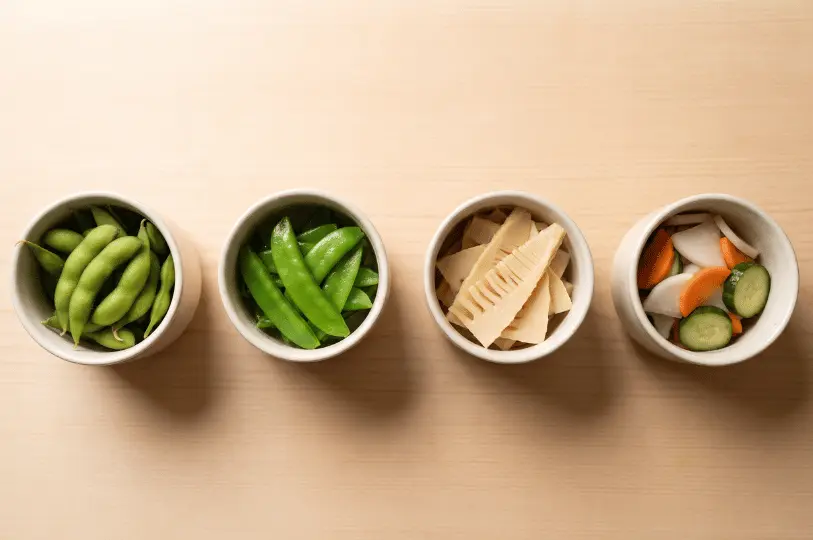
Most diners focus on the fish and skip past the vegetables. I used to do the same.
But snow peas, cucumber, bamboo shoots, and lotus root in a well-made chirashi don aren’t just decoration. They break up the richness of the raw seafood, add texture, and reflect how seriously the kitchen thinks about the dish as a whole.
In bara chirashi especially, the mix of veggies with smaller pieces of fish, sesame seeds, and seasoned sushi rice is the whole point. You eat it together, not one topping at a time.
The shiso leaf is worth mentioning separately. That soft, slightly minty garnish sitting under or beside your sashimi isn’t just decoration either. Eat it. It cleanses the palate between bites of rich, fatty fish.
Common Mistakes to Avoid
Let me be honest about the ones I’ve made.
- Judging a bowl by volume. More toppings doesn’t mean better. A quieter, well-made chirashi sushi with four or five ingredients in excellent condition beats a chaotic bowl of mediocre fish every time.
- Assuming Japanese rice is interchangeable. Grain rice variety matters. Short grain, properly cooked, properly seasoned. If the sushi rice tastes like plain white rice, the kitchen cut a corner.
- Drowning the fish in soy sauce. I did this for years. A little garnish soy sauce is enough. The fish should taste like fish, not salt.
- Arriving late to omakase. The courses are timed. Walk in fifteen minutes late and you feel it for the rest of the meal.
Frequently Asked Questions
- What’s the difference between chirashi don and kaisen don?
Chirashi don is the broader category. Kaisen don typically refers to a seafood-focused bowl, often featuring raw fish like tuna and salmon over vinegared rice. Think of kaisen don as a subset of chirashi, one that leans heavily on fresh raw seafood rather than a mix of cooked and raw ingredients. - Is bara chirashi the same as scattered sushi?
Bara chirashi is one style of scattered sushi, associated with the Kansai region. The ingredients, including cooked seafood, vegetables, and smaller pieces of fish, are mixed into the seasoned sushi rice rather than arranged on top. - Do I need to eat raw fish to enjoy chirashi?
No. Some versions include cooked seafood and cooked rice components. Bara chirashi often has a mix. Ask the restaurant about their ingredients if you prefer less raw seafood. - What’s the best entry point for someone new to Cuppage Plaza?
Start with a chirashi don at lunch. It’s approachable, affordable, and a honest way to taste the kitchen’s quality without committing to a long meal. For specific recommendations nearby, this guide to the best chirashi don in Orchard Cuppage Somerset is a helpful place to start.
One Last Thing Before You Go
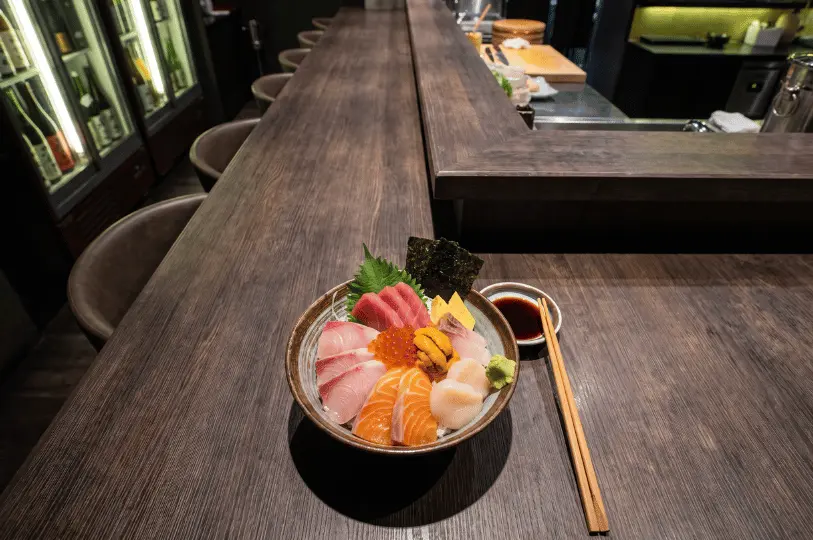
Cuppage Plaza didn’t become a Japanese food haven because it’s big or shiny. It became one because it’s full of people who care about a small, specific thing, and diners who kept coming back for it.
So go in curious. Order the chirashi bowl. Ask what the fish is today. Eat a little slower than usual.
The building won’t impress you from the street. But somewhere behind one of those quiet doors, there’s a bowl of scattered sushi over seasoned rice that just might stay with you.
I’d start there.